Contact us
Leave Your Message
0%

The 2026 bearing market is heading toward making components that are stronger, lighter, and more consistent than ever before. According to Grand View Research, the global bearings industry topped $130 billion in 2023, with automotive, wind energy, and industrial automation being the biggest drivers of demand. Meanwhile, Fortune Business Insights predicts this growth will keep going strong through 2032. It's worth noting that these reports group all types of bearings together — not just Cold Forged Bearings, which actually matters quite a bit.

Now, what exactly is cold Forging? Basically, it's a process where steel is shaped under extremely high pressure without melting it. This can help improve how the grain flows through the material, make the surface more uniform, and even get better use out of the raw steel. Plus, it’s really great for producing large quantities of bearings efficiently. Looking ahead to 2026, the main contenders in the market are deep groove ball bearings, tapered roller bearings, spherical roller bearings, and angular contact bearings. Each type is designed to handle different kinds of loads: deep groove bearings are perfect for electric motors and conveyors, tapered rollers can handle a mix of radial and axial loads, spherical roller bearings are good when shafts are misaligned, and angular contact bearings are often used in precision spindle systems.

Tedric A. Harris, a well-known expert on rolling bearings, once said that “the rolling bearing is a machine element designed to permit motion with reduced friction.” It’s a simple idea, but it’s still the guiding principle today. That said, just because a bearing has low friction doesn’t automatically mean it’ll last a long time. Factors like proper lubrication, keeping it clean, heat treatment, and correct mounting are just as important. You might look at a forged ring in the bright factory lighting and think it looks perfect, but the real test happens once it’s out in the field, dealing with vibrations, dust, and changing loads. In this article, we’re taking a look at the top Cold Forged Bearings to watch out for in 2026, based on manufacturer specs, market trends, and actual operating experience. Admittedly, some rankings are still up for debate — but that’s part of the process, right?
What Are the 2026 Top Types of Cold Forged Bearings?

Cold Forged Bearings: Definition, Principles, and Key Advantages

What Are the 2026 Top Types of Cold Forged Bearings?

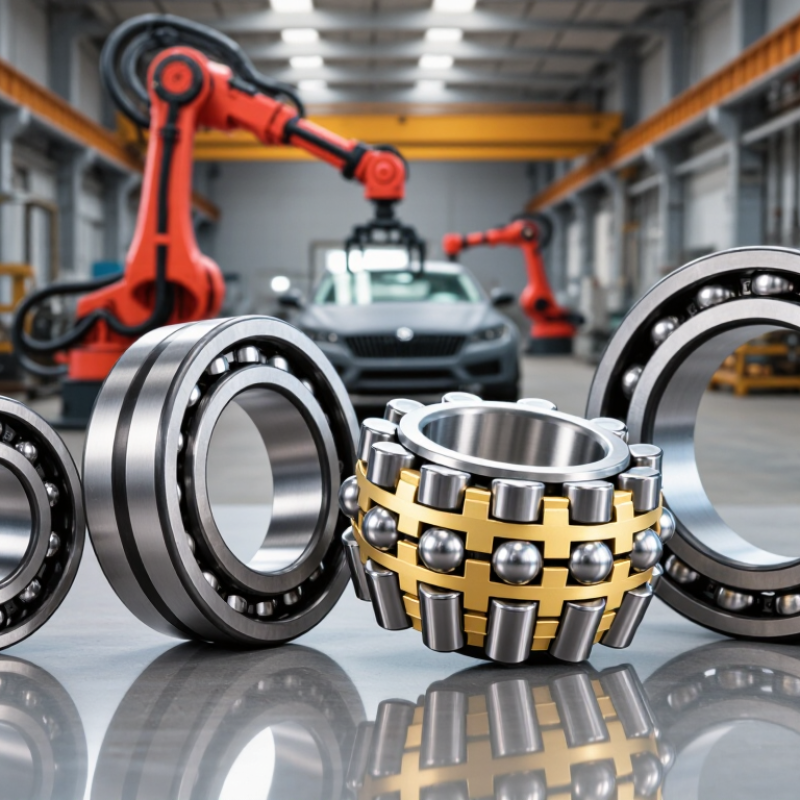
Cold forged bearings are produced by pressing heated or room-temperature steel into precise dies. The process shapes rings with limited material waste and a dense grain structure. Unlike machined bearings, cold forging can reduce cutting operations and improve production consistency. The main 2026 bearing types remain deep-groove ball, angular-contact ball, tapered-roller, and cylindrical-roller designs. Cold forging describes their manufacturing route, not their load geometry.

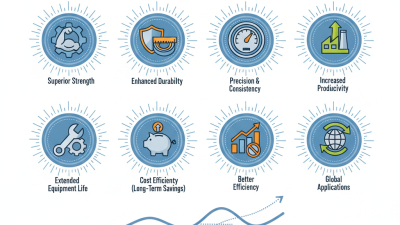
The advantages are practical. A forged raceway can offer stable dimensional accuracy, smooth rotation, and strong resistance to repeated contact stress. The U.S. Department of Energy’s Industrial Decarbonization Roadmap highlights near-net-shape forming as a route to reduce material use and manufacturing energy. Market research reports also forecast continued double-digit growth in global bearing demand through the early 2030s, driven by electric mobility, automation, and renewable-energy equipment. These figures are useful, but they do not prove that every cold forged bearing performs better. Heat treatment, steel cleanliness, lubrication, and inspection still decide service life. That detail is easy to underestimate.

Tips: Match the bearing type to the load direction and speed. Check ISO 281 rating-life calculations, but validate them with torque, noise, and contamination tests. A deep-groove bearing may suit a motor shaft, while a tapered roller bearing handles combined loads more effectively. Keep production records. Small process drift can become a large failure.

How Cold Forging Shapes Bearing Components

What Are the 2026 Top Types of Cold Forged Bearings?

Cold forging shapes bearing components by forcing steel blanks through hardened dies at room temperature. The process creates Cold Forgings with strong grain flow and consistent outer profiles. These advantages support deep-groove, needle, tapered-roller, and thrust-bearing designs. Small bearing rings and rollers benefit most from near-net forming. Less machining can mean lower material waste and shorter production cycles.

Small bearing rings and rollers benefit most from near-net forming.

A 2024 Grand View Research report estimates that the global bearing market will expand at about 8% annually through 2030. This growth reflects rising demand for compact, efficient components in automation and electric mobility. Cold Forged Parts can provide accurate dimensions before grinding and raceway finishing. ISO 281 remains important for rating life calculations, but geometry alone cannot guarantee durability. Clean steel, controlled lubrication, and heat treatment still matter. The process is not magic. Minor die wear may alter contact geometry over time.

Tips:

Check the material certificate, forging reduction, and final hardness. Inspect raceways after grinding, not only after forming. Ask for process capability data, especially for thin rings. A practical review should include noise, vibration, and dimensional results from real production batches. Designers sometimes overvalue low scrap rates. That is worth questioning when fatigue life is the priority.

Top Types of Cold Forged Bearings in 2026

In 2026, deep-groove ball bearings remain a leading cold-forged type. Their simple geometry supports high-speed rotation and moderate radial loads. Cold forming improves material flow around the rings. It can also reduce machining waste. These bearings appear in motors, conveyors, pumps, and compact electric equipment.

Angular-contact ball bearings are gaining attention where combined radial and axial loads matter. Their contact angle supports precise shaft control under acceleration. Tapered roller bearings suit heavier loads, especially in industrial gear systems and vehicle wheel assemblies. Needle roller bearings offer high load capacity within narrow spaces. Thrust ball bearings remain useful when axial force dominates. Fit matters. Clearance, hardness, and surface finish must match the operating temperature.

Cold forging is not automatically better for every bearing design. Complex shapes may require secondary grinding, heat treatment, or careful dimensional inspection. In practical production reviews, small deviations in ring roundness can create vibration and early wear. That detail is easy to overlook. The phrase Cold-Forged Or Cold-Extruded Wheels relates more closely to wheel-component manufacturing than bearing classification. Engineers should verify the material grade, load rating, lubrication method, and fatigue testing before selection. A smooth surface can still hide internal stress. This is where published test data and traceable quality records become essential.

Material Choices for Modern Cold Forged Bearings

What Are the 2026 Top Types of Cold Forged Bearings?

Material selection will define many cold forged bearings in 2026. Deep-groove, needle, and thrust designs still dominate compact machinery. Chrome-bearing steel remains popular because it combines hardness, fatigue resistance, and machinability. World Steel Association reported about 1.89 billion tonnes of crude steel production in 2023. This scale supports stable sourcing, but it does not guarantee consistent bearing quality. Heat treatment, cleanliness, and forming accuracy still decide service life.

Stainless steel suits humid rooms, food-processing equipment, and medical mechanisms. The International Stainless Steel Forum reported 58.4 million tonnes of stainless crude steel production in 2023. That figure reflects strong material availability, not automatic corrosion protection. Designers should check carbon content, surface finish, and lubricant compatibility.

For low-load sliding applications, bronze and engineered copper alloys remain useful. A Cold-Forged Or Cold-Extruded Bushing can offer quiet movement and precise wall thickness. However, poor alignment may erase its expected advantage.

Tips: Match the material to load, speed, moisture, and temperature. Ask for hardness data and dimensional reports. ISO 683-17 provides guidance for bearing steel quality. Inspect the raceway under magnification; tiny laps can become fatigue cracks. I have seen drawings specify stainless steel without defining the environment. That is an avoidable weakness. Cost comparisons should include lubrication, replacement access, and downtime, not only the purchase price.

Performance Factors and Selection Criteria

What Are the 2026 Top Types of Cold Forged Bearings?

Performance depends on the bearing type, not only its price or catalog rating. Deep groove ball bearings remain practical for radial loads, moderate axial loads, and electric motor applications. Angular contact bearings suit combined loads and higher precision. Thrust bearings handle axial force, but they need careful alignment. Needle bearings offer compact designs where radial space is limited.

Selection should begin with the real load pattern. Measure speed, temperature, shaft deflection, and operating hours. A bearing running at 3,000 revolutions per minute may need different clearance than one operating slowly under heavy force. Surface hardness, dimensional tolerance, cage design, and heat treatment also affect fatigue life. Check lubrication compatibility. Grease can resist contamination, while oil may control heat more effectively.

Sealing matters in dusty workshops.

Choose seals for the environment, not habit. Water, metal dust, vibration, and frequent starts can change performance quickly. Inspect raceways for early pitting during trials, even when calculations look acceptable. Other Cold Forgings/Cold-Forged Parts may share similar material controls, but bearing precision demands tighter process discipline. No selection rule is perfect. Unexpected misalignment can defeat an otherwise strong design. Verified test data and traceable inspection records make the final choice more reliable.

Applications and Future Trends in Cold Forged Bearings

What Are the 2026 Top Types of Cold Forged Bearings?

Cold forged bearings are gaining attention because they combine accurate geometry with efficient material use. In 2026, deep groove ball bearings remain common in electric motors, pumps, appliances, and light vehicles. Angular contact bearings support combined radial and axial loads. They suit machine tools, compressors, and high-speed drive systems. Tapered roller bearings also use cold forged rings in selected automotive and industrial applications. Their strength depends on forming control, heat treatment, and final grinding.

Applications are becoming more demanding. Electric vehicles require quiet bearings that tolerate changing speeds and limited lubrication. Robotics needs compact designs with low friction and repeatable movement. Wind equipment requires durable surfaces under vibration and variable loads. Future trends may include sensor-assisted inspection, cleaner forming lubricants, and improved steel cleanliness. Engineers are also studying ceramic-assisted and sealed designs for specialized systems. These developments sound promising, but not every factory can justify their cost. A thinner ring may reduce weight, yet it can increase deformation risks during assembly.

Tips: Match the bearing type to the real load path, not the catalog description. Check temperature, speed, contamination, and maintenance access. Ask for dimensional inspection records and hardness data. Small alignment errors can create large noise problems. Testing under actual duty cycles is still essential. Forecasts can miss practical failures. Field feedback should remain part of the design process.

Cold-Forged vs. Cold-Extruded Brake Pistons: Strength, Performance, and Selection Guide

Cold-forged and cold-extruded brake pistons are essential components in hydraulic disc-braking systems, where they transfer pressurized fluid force to the brake pads and help decelerate a vehicle. Both manufacturing methods use cold-forming technology to produce strong, precise parts without high-temperature heating. Cold forging compresses metal into a shaped die, promoting favorable grain flow, high density, and excellent resistance to impact, fatigue, and deformation. These characteristics make cold-forged pistons suitable for demanding braking conditions, frequent operation, and applications requiring maximum structural strength.

Cold extrusion pushes metal through a die to create a piston with a consistent profile, smooth surface, and reliable dimensional accuracy. This process can support efficient production while maintaining stable wall thickness and dependable movement inside the caliper bore. Compared with cold-forged designs, cold-extruded pistons may be preferred when uniform geometry, surface quality, and cost-effective manufacturing are major priorities. Proper material selection, protective finishing, and precise tolerance control remain important for both types because piston performance depends on sealing, corrosion resistance, friction, and compatibility with the brake assembly.

For passenger vehicles, commercial vehicles, and machinery, selection should reflect load, operating temperature, braking frequency, hydraulic pressure, and available installation space. Cold-forged pistons are well suited to severe-duty systems that demand enhanced strength and extended service life, while cold-extruded pistons are practical for systems emphasizing consistent dimensions, smooth operation, and production efficiency. Carefully matched piston size, material, surface treatment, and seal compatibility help maintain responsive braking and reliable performance throughout the service cycle.

FAQS

What is cold forging in bearing production?

Cold forging presses steel blanks through hardened dies at room temperature. It creates accurate shapes and strong grain flow. Less machining may follow.

Which bearing types are commonly cold forged in 2026?

Deep-groove ball bearings remain widely used. Angular-contact, tapered-roller, needle-roller, and thrust bearings are also suitable. Each design serves different loads.

Why are deep-groove ball bearings popular?

Their simple geometry supports high-speed rotation and moderate radial loads. They fit motors, conveyors, pumps, and compact electric equipment. Simple works well.

When should engineers choose angular-contact bearings?

Choose them when radial and axial loads occur together. Their contact angle helps control shaft movement during acceleration. Fit remains critical.

What advantages do needle-roller bearings provide?

Needle rollers carry substantial loads in narrow spaces. They suit compact assemblies with limited radial room. Space savings can be valuable.

Are cold-forged bearings always better than machined bearings?

No. Complex shapes may still require grinding, heat treatment, and detailed inspection. Cold forging is useful, not magical.

What quality checks matter after cold forging?

Check material certificates, forging reduction, hardness, and dimensional results. Inspect raceways after grinding. Forming inspection alone is insufficient.

Can die wear affect bearing performance?

Yes. Minor die wear can change contact geometry and ring roundness. That may increase vibration or accelerate wear. Easy to miss.

Does a smooth surface guarantee long bearing life?

No. Internal stress, steel cleanliness, lubrication, and heat treatment also affect fatigue life. A polished surface can hide problems.

What data should buyers request before selecting cold-forged bearings?

Request load ratings, fatigue tests, process capability data, and traceable quality records. Review noise and vibration from real production batches. Low scrap is not everything.

Conclusion

Cold Forged Bearings are precision components produced by shaping metal under controlled pressure at room temperature, allowing manufacturers to create strong, consistent forms with minimal material waste. This process improves grain flow, dimensional accuracy, surface quality, and production efficiency while reducing the need for extensive machining. By carefully forming rings, races, and other bearing elements, cold forging supports reliable performance in demanding operating environments.

In 2026, the leading types include deep-groove, angular-contact, thrust, tapered, and needle roller bearings, each designed for specific combinations of radial load, axial load, speed, and alignment requirements. Material selection is also essential, with choices based on hardness, fatigue resistance, corrosion protection, temperature stability, and cost. Users should evaluate load capacity, friction, lubrication, sealing, operating speed, maintenance needs, and service conditions before selecting a bearing. Common applications include automotive systems, industrial machinery, automation equipment, renewable energy devices, and precision tools. Future developments will focus on smarter manufacturing, improved materials, energy efficiency, and longer service life.
Isabella

Isabella

Isabella is a dedicated marketing professional at Shaanxi Brilliant Machinery Co., Ltd., where she plays a pivotal role in promoting the company’s commitment to manufacturing excellence and sustainability in the mechanical parts industry. With a deep understanding of the technical aspects of the......
Previous How to Choose Cold Forged Fasteners for Global Sourcing?