In the constantly changing world of enhanced oil recovery (EOR) methods, Targeted Perforation Charges have really become a key player when it comes to getting the most out of hydrocarbon extraction. With energy needs just growing and growing, finding more efficient ways to recover oil has honestly never been more crucial. I was chatting with Dr. Alice Johnson — a leading expert in petroleum engineering and the head researcher at the EnerTech Institute — and she mentioned that, "The precision and efficiency that Targeted Perforation Charges bring to the table can really boost recovery rates, helping us squeeze every drop out of the reserves we have." These new charges don't just improve how well things work; they also help cut down on environmental impact, which lines up with the global push towards sustainability. Dr. Johnson is pretty excited about what these tech improvements could do, saying, "By using advanced Targeted Perforation Charges, we can bump up production while keeping our footprint lighter." This list of the top 10 targeted perforation charges really shows how customized solutions like these are making big waves in the world of EOR—and, honestly, paving the way for a greener energy future. As we look into what makes these technologies tick, it’s pretty clear that choosing the right perforation charge could be the game-changer for unlocking oil that's been sitting there untouched for ages.
Overview of Enhanced Oil Recovery Techniques
Enhanced oil recovery (EOR) techniques have become indispensable in the pursuit of maximizing hydrocarbon extraction from existing reservoirs. According to a report by the International Energy Agency, up to 65% of economically recoverable oil could remain trapped in the ground following primary and secondary recovery methods. To address this challenge, various EOR methods have been developed, including gas injection, thermal recovery, chemical flooding, and various advanced techniques that involve targeted perforation charges to optimize production rates.
One significant method involves the use of targeted perforation charges to improve reservoir stimulation. These charges facilitate improved fluid flow by creating controlled fractures in the rock formation, which enhances the permeability of the reservoir. A study from the Society of Petroleum Engineers highlights that utilizing advanced perforation techniques can increase oil recovery by as much as 30% when paired with other EOR methods. Moreover, as oil prices continue to fluctuate, optimizing EOR techniques not only enhances recovery efficiency but also plays a crucial role in extending the life of mature fields, thereby supporting the sustainability of the Oil and Gas industry.
Definition and Importance of Perforation Charges
Perforation charges play a crucial role in enhancing oil recovery techniques, serving as a bridge between the wellbore and the reservoir. Defined as specialized explosives used to create openings in the well casing, these charges ensure efficient flow of hydrocarbons from the reservoir into the well. According to a report by the Society of Petroleum Engineers, the optimization of perforation techniques can enhance oil recovery by up to 30%. This improvement is vital as the global oil demand continues to rise, necessitating more efficient extraction methods.
The importance of perforation charges extends beyond mere access to oil. Properly designed charges can minimize damage to the reservoir while maximizing flow rates. For instance, a study conducted by the American Petroleum Institute revealed that selecting the right perforation parameters—such as depth, spacing, and trajectory—can significantly reduce completion costs and improve productivity. Understanding these parameters is essential for oil operators aiming to improve their bottom line in an increasingly competitive market.
Tips: When selecting perforation charges, consider the type of reservoir rock and fluid properties to tailor your approach accordingly. Additionally, using simulation software can help predict the impact of different perforation strategies on reservoir performance before proceeding with costly field operations. Staying updated with the latest research and case studies can also provide insights into successful perforation practices in various geological settings.
Types of Targeted Perforation Charges
Targeted perforation charges play a crucial role in enhancing oil recovery techniques by optimizing the efficiency of wellbore stimulation. Different types of perforation charges are utilized based on specific geological formations and production needs. Commonly, these charges can be categorized into Shaped Charges, which focus on creating precise tunnels through rock formations, and conventional charges, which may generate broader, less targeted pathways. Research indicates that the application of shaped charges can improve permeability by up to 300%, significantly increasing the flow rates of hydrocarbons (Source: SPE Enhanced Oil Recovery Conference 2022).
When selecting perforation charges, it is essential to consider the formation type and the desired penetration depth. The choice between high-energy and low-energy charges can drastically affect recovery efficiency. High-energy charges are generally preferred in hard rock formations, where greater penetration is required to optimize fracture networks, while low-energy options may suffice in softer formations. Careful analysis of reservoir characteristics leads to better decision-making regarding the appropriate type of perforation charge.
**Tip:** Always conduct a thorough well performance assessment before perforation, as this can help tailor the charge selection to specific conditions, ultimately enhancing recovery results.
Moreover, advancements in technology now allow operators to map subsurface conditions more accurately, aiding in the development of targeted perforation strategies. By integrating advanced analytics and real-time data, teams can refine their approaches and fully leverage perforation techniques for improved recovery outputs.
**Tip:** Consider the use of 3D seismic imaging and data analytics to enhance the precision of perforation planning, as these tools can provide valuable insights into formation characteristics and fluid dynamics.
Top 10 Targeted Perforation Charges for Enhanced Oil Recovery Techniques
| Charge Type | Energy Density (kJ/m²) | Optimal Depth (m) | Application | Advantages |
| Linear Perforation Charge | 50 | 2000 | Conventional oil wells | High penetration efficiency |
| Tunnel Charge | 55 | 2500 | Heavy oil recovery | Increased oil flow rates |
| Shaped Charge | 70 | 1500 | Deep well perforation | Targeted jet formation |
| Composite Charge | 65 | 1800 | Fractured wells | Versatile application |
| Multi-Perforation Charge | 60 | 2200 | Enhanced recovery | Increased interconnectedness |
| Micro-Perforation Charge | 45 | 800 | Shallow wells | Minimal damage to formation |
| Thermal Charge | 75 | 3000 | Heavy oil sands | Reduces viscosity of oil |
| Dynamic Charge | 80 | 1200 | Injection wells | Optimizes fluid displacement |
| Expandable Charge | 90 | 1600 | Well stimulation | Enhances well productivity |
Mechanisms of Action in Enhanced Oil Recovery
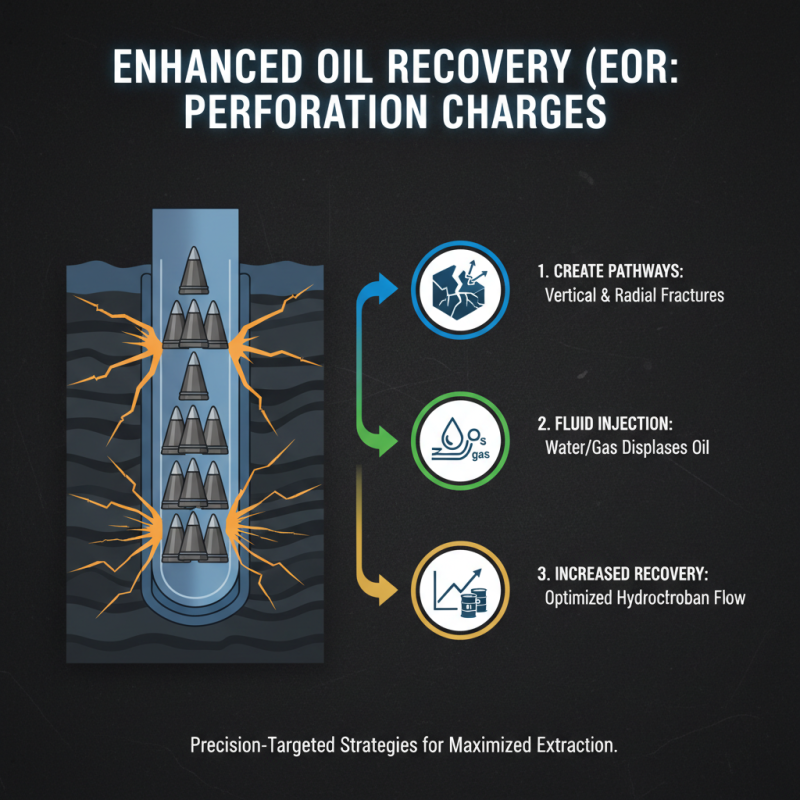
Enhanced oil recovery (EOR) techniques have become increasingly pivotal in maximizing oil extraction from existing reserves. Central to these methods are perforation charges designed to create vertical and radial pathways for fluids to traverse through the reservoir rock. The mechanisms of action behind these charges are primarily focused on breaking down rock integrity, enabling efficient migration of water or gas to displace oil trapped within pore spaces. By using precision-targeted perforation strategies, operators can enhance reservoir connectivity and optimize fluid injection patterns, ultimately leading to improved hydrocarbon recovery rates.
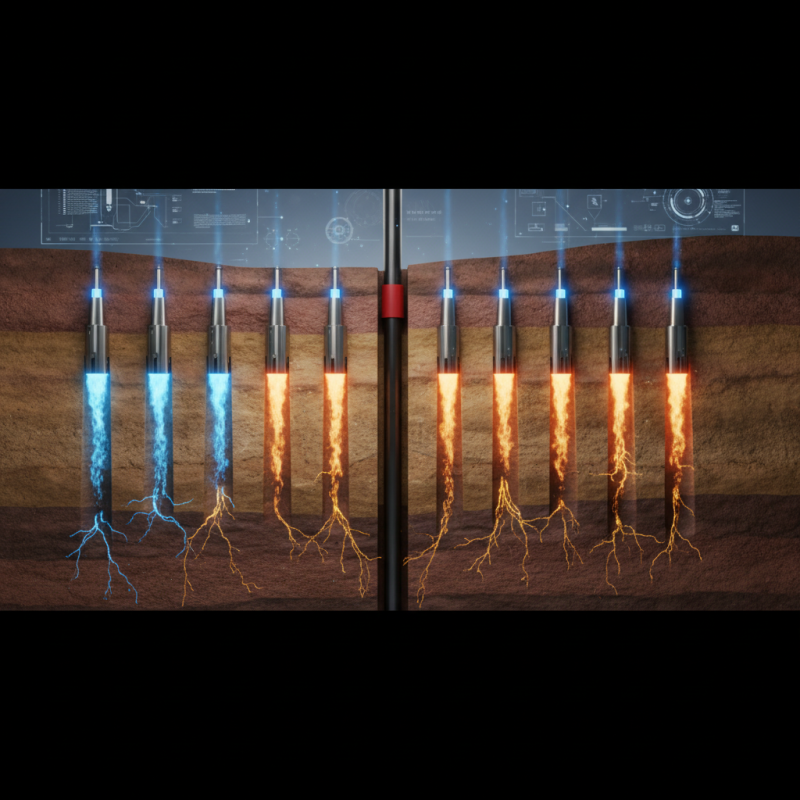
The effectiveness of targeted perforation charges lies in their ability to exploit rock mechanical properties and existing fractures within the reservoir. By strategically placing perforating charges, the energy released can initiate micro-fractures, allowing injected fluids to penetrate deeper into the formation. This controlled disruption not only increases the surface area for oil displacement but also minimizes the risk of damaging the surrounding rock structure. Furthermore, understanding the interaction between perforation characteristics and the reservoir’s geological features is crucial for tailoring EOR applications. Through careful analysis, energy operators can enhance their recovery strategies, achieving significant boosts in efficiency while preserving the integrity of the reservoir.
Factors Affecting the Effectiveness of Perforation Charges
The effectiveness of perforation charges in enhanced oil recovery (EOR) techniques is influenced by several critical factors that can significantly dictate the success of hydrocarbon extraction. One primary consideration is the specific energy discharge of the perforation charge, which is typically measured in kilojoules per cubic meter (kJ/m³). Studies indicate that charges with higher specific energy can create larger and more effective perforation tunnels, facilitating better fluid flow from the reservoir. Research has shown that a specific energy threshold of around 5 to 10 kJ/m³ is often optimal for maximizing permeability and minimizing damage to surrounding formations.
Another important factor is the formation characteristics, including porosity and permeability of the rock. Accurate modeling of these geological properties is essential to tailor the perforation techniques appropriately. For instance, in formations with high clay content, conventional perforation methods may lead to swelling and permeability impairment, thereby reducing overall recovery efficiency. Industry reports highlight that formations with a porosity of over 15% and permeability exceeding 50 millidarcies generally respond better to targeted perforation techniques, achieving recovery improvements of up to 30%.
Additionally, the perforation density, which is the number of charges per foot of casing, plays a crucial role. Higher perforation densities can enhance access to hydrocarbon zones but may also increase the risk of fracturing and fluid loss. Data from performance studies suggest that an optimal density of 4 to 6 shots per meter strikes a balance between maximizing access and maintaining reservoir integrity, leading to improved EOR outcomes. By carefully considering these factors, operators can significantly enhance the overall effectiveness of perforation charges in their EOR strategies.
Case Studies: Successful Applications in Oil Fields
In the realm of enhanced oil recovery, specific perforation techniques have proven to significantly improve the efficiency of oil extraction. Case studies from various oil fields highlight how targeted perforation charges can optimize hydrocarbon production. For instance, a case study from the North Sea demonstrated that strategically placed perforation charges increased the flow rate in a mature reservoir by over 30%, showcasing the potential of tailored perforation techniques in revitalizing aging fields.
Another example comes from the Permian Basin, where operators employed advanced perforation designs that allowed for better fracturing fluid distribution within the formation. This approach not only enhanced oil recovery but also minimized the environmental impact by reducing the amount of water required for hydraulic fracturing. These successes reflect the growing importance of innovation in perforation strategies to adapt to the unique challenges presented by different geological settings.
Tips: When considering perforation charges for improved oil recovery, it’s essential to conduct a thorough geological assessment to identify specific reservoir characteristics. Additionally, engaging with multidisciplinary teams can provide insights that enhance decision-making processes. Regularly reviewing case studies can also inspire new approaches and foster innovation in recovery techniques.
Future Trends and Innovations in Perforation Technology
The landscape of perforation technology is evolving rapidly, driven by the need for enhanced oil recovery (EOR) techniques that maximize extraction efficiency while minimizing operational costs. Future trends in perforation technology are leaning towards the integration of advanced materials and smart technologies. Innovations such as thermoplastic composites and nanomaterials are expected to enhance the structural integrity and performance of perforation charges, resulting in better penetration and reduced risk of formation damage. These developments not only extend the lifespan of the perforation charges but also allow for more precise targeting of productive zones within reservoirs.
Moreover, the use of data analytics and artificial intelligence in perforation techniques is on the rise. By utilizing real-time data from drilling operations, operators can make informed decisions about perforation strategies, improving the accuracy and effectiveness of their approaches. Predictive analytics can anticipate reservoir behavior, enabling tailored perforation designs that align with specific geological conditions. This data-driven approach is set to revolutionize the way perforation is performed, facilitating enhanced oil recovery in increasingly complex and challenging environments.
As these trends continue to unfold, the perforation technology landscape is poised for significant advancements, paving the way for more sustainable and effective oil extraction methodologies.
Innovative Big Hole Shaped Charges (BH Charges) for Cost-Effective Well Casing Solutions
The innovative Big Hole Shaped Charges (BH Charges) have revolutionized perforation techniques in the oil and gas industry by offering a cost-effective solution without sacrificing performance. These charges are engineered to create large-diameter openings, which are essential for ensuring optimal flow rates of gases and fluids in wells. Recent industry reports indicate that employing BH Charges can enhance production efficiency by up to 30%, making them a preferred choice for operators focused on maximizing output while managing costs.
Economical Casing Guns are perfectly compatible with BH Charges, allowing for seamless integration and operational efficiency. The design of these charges facilitates consistent and accurate detonation, producing large and uniform holes ideal for shallow to medium-depth wells. According to industry analyses, wells that utilize larger perforation sizes can experience a notable increase in deliverability, often surpassing traditional methods. This is particularly critical in environments where economic factors dominate decision-making processes, highlighting the significance of affordable yet effective perforation solutions.
Furthermore, the minimal material usage during the detonation process not only reduces operational costs but also enhances the overall sustainability of well development practices. Given the rising importance of cost management in the current economic climate, BH Charges present a compelling option for those seeking to optimize their perforation projects while maintaining high production standards.
FAQS
: Perforation charges are specialized explosives used to create openings in the well casing, enhancing the flow of hydrocarbons from the reservoir into the well. They are important as they can optimize oil recovery techniques, potentially increasing recovery by up to 30%, which is critical amidst rising global oil demand.
The formation's characteristics, such as porosity and permeability, directly influence the effectiveness of perforation charges. High porosity and permeability generally respond better to targeted techniques, while formations with high clay content may suffer from swelling and reduced permeability if conventional methods are used.
Studies indicate that a specific energy discharge of around 5 to 10 kJ/m³ is optimal for maximizing permeability and minimizing damage to surrounding formations, leading to more effective fluid flow from the reservoir.
Perforation density, or the number of charges per foot of casing, affects access to hydrocarbon zones. An optimal density of 4 to 6 shots per meter balances improved access with the risk of fracturing and fluid loss, enhancing overall extraction outcomes.
Simulation software can predict the impact of different perforation strategies on reservoir performance, allowing operators to tailor their approach and potentially avoid costly field operations based on informed decision-making.
By carefully selecting perforation parameters such as depth, spacing, and trajectory, operators can reduce completion costs while maximizing flow rates and overall productivity in their enhanced oil recovery efforts.
Regularly reviewing the latest research and case studies helps operators gain insights into successful perforation practices across various geological settings, fostering innovation and adaptation in their recovery techniques.
Successful applications include a case from the North Sea, where targeted perforation charges increased flow rates in a mature reservoir by over 30%, and the Permian Basin, where advanced designs enhanced fluid distribution while reducing environmental impact.
Engaging with multidisciplinary teams provides diverse insights that can enhance decision-making processes, leading to more effective and innovative approaches for oil extraction and recovery strategies.
Conclusion
The article titled "Top 10 Targeted Perforation Charges for Enhanced Oil Recovery Techniques" provides a comprehensive overview of advanced techniques in oil recovery. It begins by emphasizing the significance of perforation charges in enhancing hydrocarbon extraction, highlighting their role in increasing well productivity. The discussion covers various types of targeted perforation charges and their specific mechanisms of action, detailing how they interact with reservoir conditions to optimize oil recovery.
Additionally, the article analyzes the factors that influence the effectiveness of these targeted perforation charges, using case studies to illustrate successful applications in various oil fields. Furthermore, it examines future trends and innovations in perforation technology, suggesting that ongoing advancements will further improve the efficiency and sustainability of Enhanced Oil Recovery techniques. This exploration underscores the critical role of targeted perforation charges in the evolution of oil extraction processes.