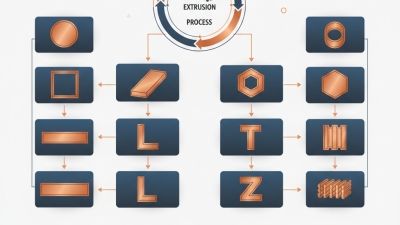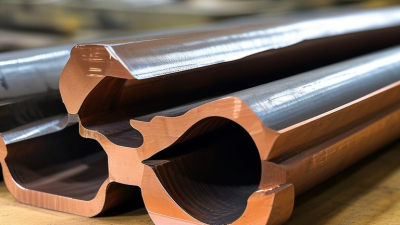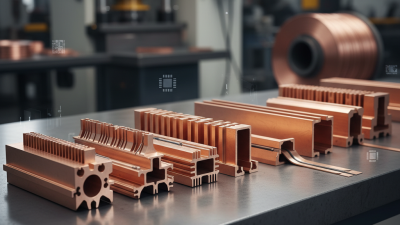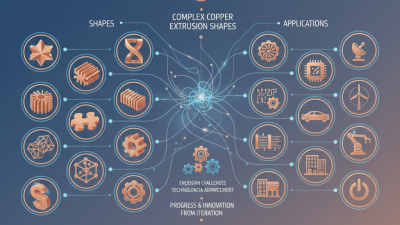
So here's the thing – buyers everywhere are scouting for copper components that can handle tighter tolerances, come in all sorts of profiles, and keep up with some seriously tight production deadlines. Now,Tailored Copper Extrusionsmight seem like the obvious fix, but honestly, picking the right supplier isn't just about flipping through a catalog. You've gotta think about alloy selection, keeping dimensions consistent, getting that surface finish just right, and making sure the documentation is rock-solid. All of that really counts. Honestly, a profile might seem totally fine on paper, but then when you get to machining or assembly, you often find it needs a redesign after all. It's a bit of a gotcha, you know?
This whole sourcing decision carries a lot of weight, you know, because of how much industry actually needs copper. I mean, check out the numbers – the World Copper Factbook 2024 from the International Copper Study Group shows we used something like 26.5 million tonnes of refined copper in 2023. And that's not a one-off – the International Energy Agency's Global Critical Minerals Outlook 2024 also sees copper demand going up as we expand and revamp our energy systems. So it's not just a minor consideration; it's pretty big. Fatih Birol, the IEA's big boss, hit the nail on the head when he said the world's energy system is shifting from fossil fuels to minerals. That's super relevant for copper, but honestly, it doesn't mean we can just relax – supply could still be tight, and prices? Who knows, they might swing wild.
So, if you're buying extrusions internationally, this guide is for you. It looks at seven different options, but we're not just talking about shapes. We dig into how flexible the profiles are, what alloys they can handle, how they keep quality in check, their production capacity, and whether they actually support exporters. Now, here's the thing: you can't just take their word for it. You've got to verify the tolerances, ask for test reports, check their packaging, and clarify lead times – all with each supplier. And don't overlook the small stuff. A tiny dimension screw-up can hold up your whole assembly, and ambiguous specs can turn a simple quote into a headache. Think of this guide as a launching pad, not the final answer. You still need to do your own technical review. Hey, before you dive into that production order, make sure you've gotten some sample parts and squared away your requirements. It's a total game-changer, trust me.
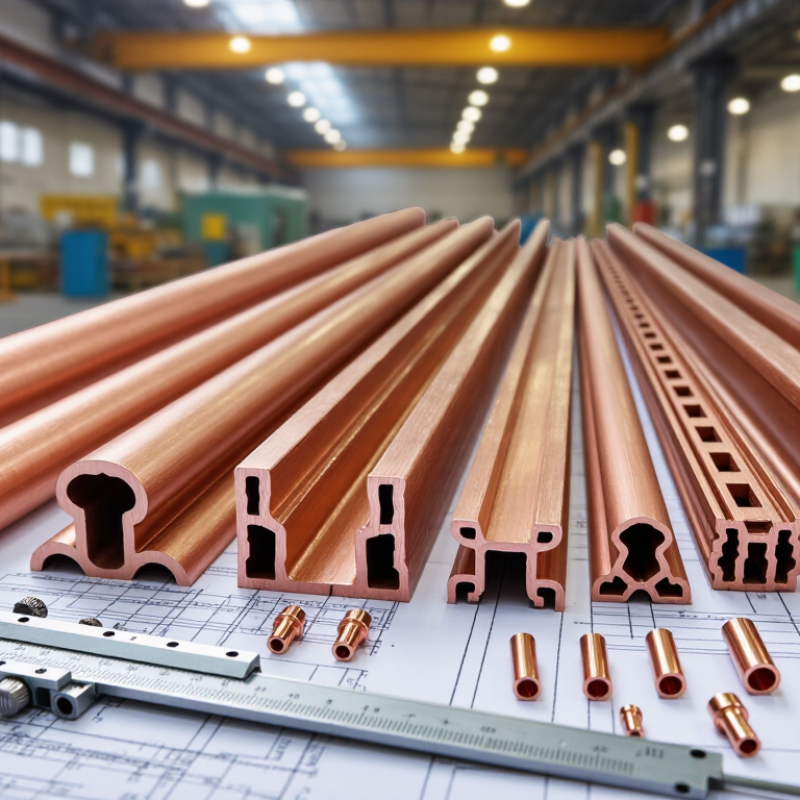
Copper busbar extrusions provide a shaped, conductive path for distributing power inside switchgear, control panels, and industrial equipment. Their cross-section can be designed around available space, connection points, and expected current, rather than forcing a standard bar into a tight layout. Copper Bar Extrusions may include slots, ribs, or stepped profiles that simplify mounting and help keep connections accessible. Good design starts with real operating conditions. Engineers should assess current, temperature rise, enclosure ventilation, and fault stresses before choosing dimensions.
Details matter. A clean, even surface helps make reliable electrical joints, but contact faces still need suitable preparation and correctly controlled fastening. Sharp edges can complicate handling and insulation, so finishing should be specified clearly. Buyers should request material and dimensional records, and confirm tolerances against the assembly drawing. For demanding installations, sample parts can reveal fit issues before full production. That step takes time. It can prevent rework.
Extrusion is not automatically the best choice for every busbar. Tooling, profile complexity, and production volume affect cost and lead time; simple flat bars may suit some projects better. One point is easy to overlook: a busbar that fits perfectly on paper may behave differently once supports, adjacent conductors, and enclosure airflow are added. Review the complete assembly, then verify performance through appropriate testing and qualified engineering checks.
Copper tube extrusions can serve as practical pathways for heat and fluid systems. Their circular profiles support steady flow, while copper’s thermal conductivity helps move heat through compact equipment. Designers may specify tubes for heat exchangers, cooling circuits, and plumbing assemblies, depending on operating conditions.
Fit matters. A tube must match the system’s pressure, temperature, fluid, and connection method. Wall thickness and diameter affect both strength and flow, so checking drawings against actual requirements is essential. During inspection, look for consistent dimensions, clean cut ends, and surfaces free from dents or visible cracks. Small defects can complicate assembly.
Not every application needs the same alloy or temper. That choice deserves care. Buyers should request material documentation and dimensional tolerances, then confirm compatibility with fittings and joining processes. In practice, specifications can still miss details, such as vibration or repeated thermal cycling. Reviewing these conditions early can reduce rework, though no checklist replaces testing in the intended system.
Copper heat-sink profiles help move heat away from compact electronics where airflow and installation space are limited. The Copper Development Association’s copper alloy data lists electrical-grade copper thermal conductivity near 391 W/m·K, though exact values depend on grade and temper. That high conductivity can support rapid heat spreading from a small contact area into fins. Every millimeter matters.
For designers, tailored extrusions can combine a mounting base with closely spaced fins, reducing separate parts and simplifying assembly. Copper Rod Extrusions can also be machined into custom profile stock for prototypes or short production runs. Yet copper is dense: a heat sink may perform well thermally and still exceed a product’s weight target. Check the full assembly, not just the profile. Fin spacing, contact pressure, surface flatness, and airflow all affect real cooling performance. A numerical simulation is useful, but it should be checked against measurements from a working unit.
The International Copper Association’s technical resources describe copper’s strong heat-transfer properties, but material choice is not a shortcut around thermal testing. Ask suppliers for grade certificates, dimensional tolerances, and conductivity documentation. Test under the actual fan speed and ambient temperature. Small details matter. A poorly seated base can undermine an otherwise carefully designed profile.
Copper channel extrusions provide strong, conductive support for equipment frames, mounting rails, and protective structures. Their open channel shape reduces weight while offering practical surfaces for fastening. In field projects, engineers often select copper for grounding paths, heat transfer, and corrosion resistance. Dimensions should match the frame load, bolt spacing, and available installation clearance. A channel that looks adequate may still flex under vibration.
Custom profiles can include drilled holes, slotted openings, flanges, or reinforced corners. Copper Tube Extrusions may suit projects requiring enclosed passages or controlled heat movement. Material selection also matters. Different copper grades balance conductivity, strength, machinability, and cost differently. Experienced fabricators review the complete assembly, not only the extrusion drawing. They check wall thickness, bend radius, joint access, and thermal expansion. Small errors become expensive during installation.
Tips: Confirm tolerances before production. Leave room for washers and tools. Ask for sample sections when the profile is complex. Inspect straightness, surface condition, and hole alignment after delivery. A clean reddish surface is not enough evidence of quality. Request material certificates and dimensional inspection records. Also test the finished frame under realistic vibration and heat conditions. Some designs appear efficient on paper but create awkward maintenance access. Reconsidering them early is usually worthwhile.
Copper angle extrusions provide practical reinforcement where strength, conductivity, and corrosion resistance must work together. Their L-shaped profile supports edges, frames, brackets, and enclosure corners. Custom dimensions help engineers match wall thickness, load paths, and available installation space. A clean 90-degree angle can reduce movement at a joint.
In field applications, I have seen small tolerance errors create larger assembly problems. Uneven legs may leave gaps under fasteners. Poorly finished edges can damage insulation or protective coatings. Buyers should review alloy grade, temper, corner radius, straightness, and surface condition before production. Mill certificates and dimensional inspection reports add useful confidence. They also support more reliable cross-border purchasing.
Copper angles suit electrical cabinets, busbar supports, thermal equipment, and architectural frames. However, copper is softer than many structural metals. It should not replace a primary load-bearing member without engineering verification. Contact with aluminum or steel may increase galvanic corrosion in damp environments. Insulating washers, compatible coatings, and controlled drainage can reduce that risk. The best extrusion is not always the thickest one. A lighter profile may improve handling, but cost savings can become false economy when deflection or rework appears.
Copper hollow profiles can reduce mass while keeping material around the areas that carry load. Their geometry can also provide channels for wiring, fluid flow, or mounting features. In heat-transfer assemblies, copper’s high thermal conductivity is useful; the Copper Development Association lists about 223 Btu·ft/(h·ft²·°F) for pure copper at room temperature. Actual performance depends on alloy, temper, wall thickness, and operating conditions. A thin wall may save weight, but it can complicate forming and handling. That trade-off deserves a prototype, not a guess.
The USGS Mineral Commodity Summaries 2025 estimates global refined copper production at roughly 27 million metric tons in 2024. This scale supports broad material availability, but it does not guarantee that every alloy or section size is readily available. Copper Alloy Extrusions can be tailored with rounded corners, controlled wall thickness, and integral ribs to suit a component’s function. Buyers should review dimensional tolerances, straightness, surface condition, and material certification with suppliers. Small details matter. A profile that looks efficient on a drawing may still be difficult to machine or join.
Tips: Specify the alloy and temper, then share a cross-section drawing and target loads. Ask for sample lengths and inspection data before approving production. Keep one assumption open: the lightest profile is not always the most reliable one.
| Hollow Profile | Typical Copper Grade | Indicative Section Range | Key Functional Benefit | Common Applications | Selection Consideration |
|---|---|---|---|---|---|
| Round tube | C12200 phosphorus-deoxidized copper | Outer diameter: 6–80 mm Wall thickness: 0.8–5 mm | Efficient flow path with good thermal conductivity and pressure-capable designs when correctly specified. | Heat exchangers, plumbing assemblies, refrigeration lines | Specify the required pressure, temper, wall tolerance, and any applicable fluid-system standard. |
| Square hollow section | C11000 electrolytic tough-pitch copper | Side: 10–60 mm Wall thickness: 1–5 mm | Flat faces simplify mounting and joining while the hollow section reduces material weight. | Electrical equipment frames, busbar supports, thermal assemblies | Confirm corner radii and wall uniformity; sharp internal corners are generally difficult to produce. |
| Rectangular hollow section | C11000 or C12200 | Width: 10–100 mm Height: 6–50 mm Wall thickness: 1–5 mm | Low-profile geometry can fit tight spaces and provide a broad surface for heat transfer or mounting. | Cooling plates, electrical enclosures, compact structural components | Check the width-to-height ratio and tolerances, especially where the section must remain straight. |
| Oval hollow tube | C12200 phosphorus-deoxidized copper | Major axis: 12–60 mm Minor axis: 6–30 mm Wall thickness: 0.8–4 mm | Shallow profile can provide a broad contact area while limiting overall component depth. | Radiators, heat-transfer coils, compact fluid pathways | Specify the oval dimensions and orientation clearly; forming and downstream bending affect final shape. |
| Multi-port hollow profile | C12200 or another suitable deoxidized copper grade | Overall width: 15–80 mm Typical: 2–8 internal channels | Several flow passages can be integrated into one profile to reduce assembly complexity. | Heat exchangers, evaporators, liquid-cooling components | Define channel size, separating-wall thickness, cleanliness, and leak-testing requirements. |
| Ribbed hollow profile | C11000 or C12200 | Overall width: 15–80 mm Wall thickness: 1–4 mm | Integrated ribs can increase stiffness or surface area without adding separate parts. | Thermal-management parts, equipment housings, custom supports | Keep rib geometry and wall transitions practical for extrusion and any required secondary machining. |
| Custom asymmetric hollow profile | Grade selected for conductivity, forming, and service environment | Typically designed around the required envelope; section and wall dimensions are project-specific | Combines multiple mounting, routing, or heat-transfer features in a single tailored cross-section. | Specialty electrical, industrial, transportation, and thermal components | Review die feasibility, dimensional tolerances, minimum wall sections, finishing, and production volume together. |
| Indicative ranges are planning examples, not guaranteed production limits. Available dimensions, tolerances, temper, properties, and extrusion feasibility depend on the copper grade, profile geometry, tooling, and manufacturing route. Confirm requirements with a qualified extruder before design release. | |||||
Tailored copper extrusions turn application requirements into a precise cross-section, rather than forcing a standard profile to do every job. A busbar may need broad contact faces and rounded edges; a heat-transfer channel may require narrow fins and a carefully placed internal passage. Small changes matter. They affect fit, current flow, cooling, and assembly time.
The International Energy Agency’s Global Critical Minerals Outlook 2024 projects copper demand reaching about 31 million tonnes by 2035 under its stated-policies scenario. That growth makes efficient material use and dependable component design increasingly important. For buyers, a useful extrusion brief includes alloy, tolerances, wall thickness, temper, finish, and operating environment. Include a drawing with critical dimensions marked, not just a sample shape. Also discuss machining, joining, and inspection before approving production tooling.
There are trade-offs. A thinner wall can reduce weight, but may complicate extrusion and increase distortion risk. A complex hollow profile can combine functions, yet its tooling and quality checks may be harder to manage. IEA demand projections do not guarantee availability or price stability. Treat them as context, not a purchasing forecast. One detail is often missed: a profile that looks efficient on paper may be awkward to clean or assemble on the shop floor. Test the real part. Then revise the drawing.
Custom copper shapes matched to application-specific electrical, thermal, and mechanical requirements
Electrical conductivity is a key selection factor for copper extrusions. High-conductivity grades are suited to busbars, power rails, and heat-transfer profiles, while lower-conductivity alloys can provide improved strength, wear resistance, or spring performance for specialized shapes. Values shown are typical nominal conductivity levels at 20°C and may vary with temper, dimensions, processing, and test method.
They guide fluids and transfer heat in compact systems. Common uses include heat exchangers, cooling circuits, and plumbing assemblies.
Check pressure, temperature, fluid type, diameter, wall thickness, and connection method. Fit matters. Confirm drawings against actual conditions.
Inspect consistent dimensions, clean cut ends, straightness, and surfaces without dents or visible cracks. Small defects matter.
No. Alloy and temper should match conductivity, strength, forming, and joining requirements. Request material documents and tolerance records.
They support equipment frames, mounting rails, and protective structures. Their open shape reduces weight while providing fastening surfaces.
Review frame loads, bolt spacing, installation clearance, wall thickness, bend radius, and maintenance access. A channel may still flex under vibration.
Profiles may include holes, slots, flanges, or reinforced corners. Sample sections can reveal awkward clearances before production.
Copper is relatively soft and may deflect under heavy loads. It should not replace a primary structural member without engineering verification.
Use insulating washers, compatible coatings, and controlled drainage near aluminum or steel. Damp contact creates risk. The protection may still need testing.
Test the completed frame or fluid system under realistic vibration, heat, and thermal cycling. Paper calculations are useful, but incomplete.
Tailored Copper Extrusions provide reliable, application-focused solutions for electrical, thermal, structural, and fluid-handling systems. Copper busbar extrusions support efficient power distribution, while copper tube extrusions are well suited to thermal transfer and fluid circulation. For compact cooling assemblies, copper heat-sink profiles help dissipate heat effectively and maintain stable operating temperatures. Copper channel extrusions can be used to create durable equipment frames, supports, and mounting structures, offering a practical balance of strength and machinability.
Copper angle extrusions add reinforcement to corners, joints, and load-bearing assemblies, while hollow copper profiles reduce weight without sacrificing functional performance. When standard profiles cannot meet specific dimensional or performance requirements, custom copper shapes can be developed for application-specific designs. Together, these seven extrusion options help global buyers select dependable copper components that align with their system requirements, manufacturing processes, and long-term performance goals.