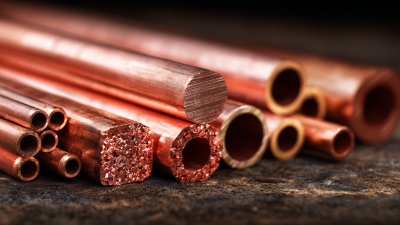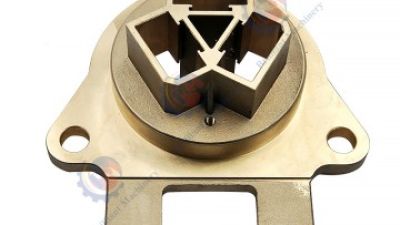
Sourcing copper extruded shapes in 2026? It's not just about lining up prices on a supplier's website. You've got to tie together alloy choice, profile geometry, tolerances, and whether the supplier can actually handle the production volume. Copper extruded shapes can look pretty straightforward, but tiny dimensional shifts can mess with assembly, conductivity, heat transfer, and machining costs later. Honestly, a solid sourcing process starts with a clear technical drawing—one that spells out alloy grade, temper, wall thickness, corner radius, surface finish, and what tolerances are acceptable.
Most experienced buyers don't just take one quote and run with it. They look at a few qualified manufacturers. Check the extrusion equipment, tooling, quality records, material certs, and inspection procedures. And ask: can the supplier trace the profile all the way back from billet to finished part? Names like KME, Wieland, and Mueller Industries carry weight, sure. But every project still needs its own verification. Reputation helps—it just doesn't replace evidence.
Before you green-light mass production, get samples. Measure them with calibrated tools. If conductivity matters, test it. Nail down packaging, moisture protection, labeling, delivery terms, and what happens if things go sideways. Extruded Copper Shapes can pick up surface marks or distortion when handling is sloppy. That risk is easy to overlook.
No process is flawless. Forecasts change. A supplier that looked super competitive might later struggle with capacity. A second source can soften the blow, though it may add qualification costs. In 2026, the best sourcing calls will balance engineering data, supplier experience, open communication, and realistic commercial expectations. Cheap isn't always efficient. Good documentation matters.
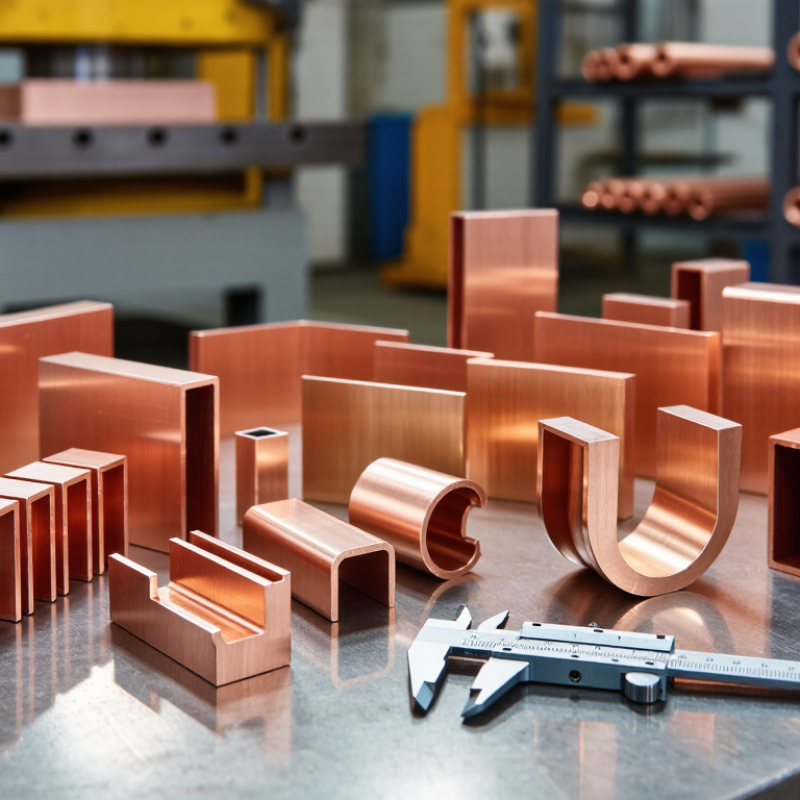
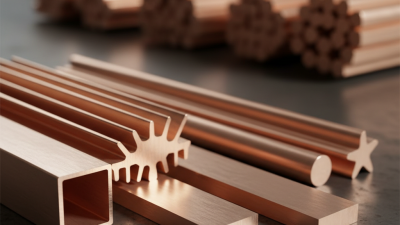
Copper extruded shapes are continuous profiles formed by pressing heated copper billets through a shaped die. The process creates precise sections, including bars, tubes, channels, rails, and custom electrical profiles. Their high conductivity and thermal performance support switchgear, transformers, motors, battery systems, heat exchangers, and industrial machinery. Some profiles look simple, but tolerances can be demanding.
The International Copper Study Group reported refined copper usage of about 26 million tonnes in 2024, with electrical applications remaining a major demand driver. The International Energy Agency also projects strong copper demand growth through 2035, linked to grids, electric vehicles, and clean-energy equipment. These figures matter when planning supply, because capacity and delivery times can change quickly.
A reliable sourcing process starts with conductivity, alloy, temper, dimensions, corner radii, and straightness. Request mill certificates, chemical analysis, dimensional inspection records, and sample lengths before approving production. Ask whether the supplier controls die wear and billet temperature. A neat drawing is not enough. Surface marks may affect contact resistance or plating quality. Alloy selection can also be imperfect; high conductivity may reduce strength, while stronger alloys can increase electrical losses. The USGS Mineral Commodity Summaries 2025 identifies copper as a critical industrial material with extensive global refining and recycling activity. Buyers should compare recycled content, origin documentation, minimum order quantities, and realistic lead times rather than relying only on a low unit price.
Sourcing Copper Extruded Shapes starts with a precise material specification, not a broad request for “copper.” Confirm the grade against conductivity, strength, corrosion exposure, and joining method. High-conductivity copper may suit busbars, while copper alloys can offer better hardness or wear resistance. Ask for mill certificates, chemical analysis, and test results from each production lot. A certificate alone is not proof of fit.
Define the profile with a controlled drawing. Include width, wall thickness, corner radii, holes, slots, and cut lengths. Extrusion dies can reproduce complex channels, but thin walls may distort during cooling. State dimensional tolerances beside critical features. General tolerances should not govern contact faces, press fits, or electrical interfaces. I have seen projects lose time because a “standard” tolerance was never defined.
Performance requirements need measurable limits. Specify conductivity in percent IACS, tensile strength, hardness, surface condition, and allowable temperature rise. For plated or treated surfaces, identify thickness, adhesion, and inspection methods. Request sample sections before approving full production. A small cross-section can reveal voids, tearing, or uneven corners. Do not overlook packaging; soft copper can arrive scratched or bent. One detail is often missed. Review the drawing with the extruder, designer, and quality inspector together. Their feedback may expose an attractive design that cannot hold its tolerance economically.
How to Source Copper Extruded Shapes in 2026?
Standard copper shapes remain the practical starting point for many sourcing projects. Flat bars, round rods, tubes, and square profiles are widely available. They usually offer shorter lead times and lower tooling costs. The U.S. Geological Survey reported about 22 million metric tons of mined copper production in 2024. That scale supports broad material availability, but not every specification. Standard sections may require sawing, drilling, or milling. Each extra operation adds scrap, handling, and tolerance risk. A simple bar can still create hidden costs.
Custom extrusion becomes more attractive when the design needs integrated channels, mounting rails, or controlled wall thickness. Complex Copper Extrusion Shapes can reduce assembly steps and improve electrical contact areas. However, custom dies require engineering review, trial runs, and minimum order quantities. For hollow profiles, porthole extrusion may be suitable, while solid profiles often use direct extrusion. Ask for conductivity, temper, dimensional tolerance, surface condition, and traceability data. Do not accept “copper” as a complete specification.
The International Copper Study Group has forecast continued growth in refined copper use, linked to electrification and grid investment. The International Energy Agency also identifies copper as a major supply concern for clean-energy expansion. These reports support early purchasing, not rushed purchasing. Request samples cut from production-length material. Inspect corners, twist, burrs, and oxide marks under real lighting. Standard shapes are safer for uncertain demand. Custom shapes win when machining costs repeat. Sometimes, the clever design is too expensive. Recheck the drawing.
Custom extrusion is useful when one copper profile must combine mounting, cooling, and electrical functions. Standard bars and tubes are usually simpler to source when the required geometry already matches catalog dimensions.
Calculated from the stated cross-sectional dimensions using copper density of 8.96 g/cm³. The custom profile represents an engineered 400 mm² net-copper-area target.
Sourcing copper extruded shapes in 2026 requires more than comparing quotations. The International Copper Study Group forecast refined copper usage to grow 3.3% in 2025. That pressure may shorten lead times and increase substitution risks. The USGS Mineral Commodity Summaries 2025 reported global copper mine production near 22 million metric tons in 2024. Strong demand makes supplier capacity a commercial issue, not just a technical detail.
Ask each supplier for press capacity, billet-heating controls, die maintenance records, and monthly production limits. Request samples with the same copper grade, wall thickness, and profile complexity as your final design. For Precision Hot Forged Shapes, confirm grain flow, forging temperature, machining allowance, and dimensional stability. A capable supplier should provide mill certificates, conductivity results, tensile data, and batch traceability. ISO 9001 certification supports process control, but it does not prove every part meets your drawing. That distinction is often missed.
Tips: Visit the production floor when possible. Watch how operators label billets and isolate nonconforming material. Verify calibration records for micrometers, spectrometers, and conductivity meters. Ask for recent third-party audit findings, not polished brochures. Also, compare actual scrap rates and corrective-action response times. I would treat vague answers as a warning. A certificate can look impressive while process discipline remains inconsistent. Recheck every assumption before signing a long-term agreement.
How to Source Copper Extruded Shapes in 2026?
Copper sourcing is becoming less forgiving. The U.S. Geological Survey’s Mineral Commodity Summaries 2025 estimates global copper mine production at about 22 million metric tons in 2024. The International Energy Agency’s Global Critical Minerals Outlook 2024 warns that announced projects may satisfy only around 70% of copper demand by 2035. That supply gap affects pricing, capacity, and delivery promises.
Ask for a technical quote, not a catalogue price. Provide the alloy, temper, cross-sectional drawing, tolerances, length, straightness, surface finish, and annual volume. Request separate prices for tooling, samples, production, packaging, and freight. State the required certification and inspection method. For Heavy Duty Hot Forged Shapes, clarify whether extrusion, forging, or a combined process is intended. The wording matters.
Request samples before approving production. Measure wall thickness, burrs, conductivity, hardness, and fit against the mating part. Ask for a realistic lead time, including tooling and first-article approval. Confirm the minimum order quantity and whether partial releases are possible. My early RFQs were too vague, and the cheapest response created rework later. That mistake still costs more than a careful question. A supplier should explain capacity limits, material traceability, and rejection procedures in writing. If the answer feels rushed, pause.
| Data Dimension | Recommended Specification or Request | Typical Planning Data | What to Confirm in the Technical Quote |
|---|---|---|---|
| 1. Material and Metallurgical Requirements | |||
| Material grade | Select the alloy according to conductivity, strength, corrosion resistance, machinability, and forming requirements. |
| Exact alloy designation, applicable ASTM/EN/JIS standard, chemical composition, conductivity, hardness, and certificate type. |
| Applicable standards | Request the material and extrusion standard named directly on the quotation and purchase order. | Common reference families include ASTM B170, ASTM B187/B187M, ASTM B224, EN 12165, EN 13601, and JIS H3250, depending on alloy and product form. | Confirm that the cited standard applies to the selected copper grade, extruded shape, temper, dimensions, and final inspection method. |
| Temper or mechanical condition | Specify annealed, as-extruded, half-hard, hard, or another standardized temper where applicable. | Softer tempers generally support easier bending and forming; harder tempers generally provide higher strength and wear resistance. | Tensile strength, yield strength, elongation, hardness range, and whether properties are tested in the finished profile. |
| Electrical conductivity | State the minimum conductivity requirement if the profile is used for busbars, terminals, electrical contacts, or heat-transfer components. | C11000 and C10200 are commonly selected for high-conductivity applications; actual values depend on chemistry, processing, and temper. | Conductivity test method, minimum value in % IACS or MS/m, sampling location, and test report availability. |
| 2. Profile Design and Dimensional Data | |||
| Cross-sectional drawing | Submit a fully dimensioned 2D drawing in PDF and, preferably, a native CAD file such as DWG, DXF, STEP, or similar. | The drawing should identify overall width, height, wall thickness, ribs, slots, holes, radii, datum references, and critical-to-function dimensions. | Drawing revision, units, projection method, tolerances, surface zones, inspection datums, and approval procedure for profile changes. |
| Profile size and wall thickness | Provide the maximum envelope and the thinnest section that must be consistently extruded. | Practical capability depends on alloy, shape complexity, extrusion ratio, tooling, and press capacity. Thin walls and sharp internal corners normally require engineering review. | Minimum guaranteed wall thickness, local filling capability, straightness limits, and any areas that may require secondary machining. |
| Dimensional tolerances | Separate general tolerances from critical tolerances and identify the dimensions that affect assembly or electrical performance. | For many commercial extruded copper shapes, general dimensional tolerances are often in the range of approximately ±0.10 to ±0.50 mm, depending on size, geometry, and standard. | Applicable tolerance table, measurement method, gauge resolution, profile distortion allowance, and capability data for critical dimensions. |
| Length tolerance and cutting | Specify supplied coil, random length, fixed length, or cut-to-length requirements. | Fixed-length cutting is commonly quoted separately from extrusion. A practical planning range may be approximately ±0.5 to ±2.0 mm, subject to length and equipment. | Cut length, allowable burr, squareness, end-face condition, minimum cut length, and packing method. |
| Surface finish | Define whether the profile will be supplied mill-finished, brushed, polished, plated, tinned, or otherwise treated. | Standard mill finish is common for extruded copper. Cosmetic finishes usually require additional processing and may extend the schedule. | Surface roughness requirement, allowable scratches or die lines, tarnish limits, protective film, cleaning, and packaging requirements. |
| 3. Tooling, Samples, and First-Article Approval | |||
| Extrusion die or tooling | Request a separate tooling quotation and confirm ownership, storage, maintenance, and modification terms. | Prototype or production tooling commonly requires approximately 2–6 weeks, depending on profile complexity and approval cycles. | Tooling material, die life estimate, die repair policy, tool-storage period, replacement cost, and whether tooling can be transferred. |
| Sample quantity | Request samples made with production-intent tooling whenever possible. | A useful first-article quantity is often 5–20 pieces for dimensional review, plus material certificates and inspection results. | Sample dimensions, sample length, sample charge, freight responsibility, inspection report format, and sample approval deadline. |
| Prototype lead time | Ask for separate dates for drawing review, tooling completion, first extrusion, sample inspection, and sample shipment. | A typical planning range is approximately 4–8 weeks after drawing approval and tooling authorization. | Lead-time assumptions, engineering response time, holiday shutdowns, raw-material availability, and the definition of “sample complete.” |
| First-article inspection | Request a dimensional report for all critical characteristics and a material certificate for the supplied heat or lot. | First-article approval commonly includes profile measurements, length, straightness, twist, surface inspection, chemistry, conductivity, and mechanical properties where specified. | Inspection sampling plan, measurement equipment calibration, nonconformance process, corrective-action timing, and approval sign-off responsibilities. |
| 4. Commercial Quote, Lead Time, and MOQ | |||
| Production minimum order quantity | Request MOQ by profile, alloy, temper, and purchase order rather than accepting a general supplier MOQ. | Custom copper extrusions are often quoted at approximately 100–500 kg per profile; some suppliers may require more or accept smaller trial lots at a premium. | MOQ in kilograms and pieces, minimum melt or extrusion run, surcharge below MOQ, allowed mixed lengths, and whether MOQ resets for each revision. |
| Production lead time | Request the lead time after approved drawing, released purchase order, deposit, and raw-material confirmation. | A common planning range is approximately 6–12 weeks for a repeat custom profile after tooling is available; complex finishing or export arrangements may add time. | Production queue, tooling availability, raw-material procurement, finishing time, inspection time, shipping date, and schedule-change notification rules. |
| Price-break quantities | Ask for at least three quantity levels to compare tooling and production economics. | Suggested request levels: 100 kg, 500 kg, and 1,000 kg, or the buyer’s expected annual-volume brackets. | Price basis, currency, validity period, alloy surcharge, tooling amortization, packaging, inspection, freight, taxes, and payment terms. |
| Incoterms and shipment basis | Request the same Incoterms® rule and named place from every quoted source for a fair comparison. | Common quotation bases include EXW, FCA, FOB, CPT, and DAP. The selected term changes freight responsibility, risk transfer, and landed cost. | Named place, export documentation, freight estimate, insurance responsibility, customs classification, packaging weight, and delivery estimate. |
| 5. Quality, Compliance, and Delivery Control | |||
| Material traceability | Require heat or lot identification on certificates, labels, and packing documentation. | Standard documentation may include a certificate of conformity, chemical composition, conductivity, mechanical properties, and lot identification. | Certificate standard, third-party testing requirements, retained samples, traceability duration, and document language. |
| RoHS, REACH, and restricted substances | State the regulatory market and request a written declaration when the profile is used in electrical, electronic, or industrial equipment. | Compliance depends on the alloy, plating, lubricants, packaging, and destination market; it should be verified against the latest applicable regulatory requirements. | Declaration scope, substance limits, plating chemistry, test reports, exemptions, and responsibility for regulatory updates. |
| Packaging and protection | Define protection against oxidation, scratching, bending, moisture, and mixed-lot identification. | Typical options include sealed plastic wrapping, paper interleaving, wooden crates, bundles with separators, desiccant, and corrosion-protection materials. | Bundle weight, maximum package length, lifting points, moisture protection, label content, barcode requirements, and packaging approval samples. |
| Acceptance criteria | Attach the drawing, inspection plan, material standard, and approved sample to the purchase order. | Acceptance should cover dimensions, straightness, twist, cut length, surface quality, conductivity, mechanical properties, documentation, and packaging condition. | Inspection level, allowable rework, rejection procedure, replacement timing, warranty period, and responsibility for sorting or return freight. |
| 6. Minimum Information to Include in the RFQ | |||
| RFQ submission checklist |
| Ask each potential source to return the information in the same format so technical capability, total cost, MOQ, sample timing, and production risk can be compared consistently. | |
Sourcing copper extruded shapes in 2026 requires more than comparing quotations. The International Energy Agency’s Global Critical Minerals Outlook 2024 projects clean-energy copper demand to rise from about 6.4 million tonnes in 2023 to 10.2 million tonnes by 2035. This pressure can expose weak traceability and rushed production. Ask suppliers for alloy certificates, recycled-content records, RoHS and REACH declarations, and documented origin information. Confirm that certificates match the actual billet heat number.
Inspect production before shipment. Review die drawings, corner radii, wall thickness, straightness, surface finish, conductivity, and tensile results. A practical inspection plan should define sample quantity, measuring tools, acceptance limits, and corrective actions. Use calibrated gauges, not visual confidence. Too often, a clean-looking profile hides internal dimensional drift. I have seen this become expensive after anodizing or assembly. That mistake is avoidable.
Delivery control also needs engineering attention. The International Copper Study Group reported refined copper usage above 26 million tonnes annually in its 2024 market outlook, highlighting a tight and volatile supply environment. Reserve production capacity early, then track billet availability, extrusion dates, aging or heat treatment, packing, and port milestones. Use moisture-resistant wrapping, protective separators, and clear bundle labels. Share inspection photographs and packing lists before loading. Build a realistic buffer for customs and inland transport. Not every delay is a supplier failure. Forecasts change, and buyers sometimes provide incomplete drawings. Recheck assumptions before blaming production.
Copper alloy die castings provide safe, durable, and efficient solutions for food and beverage processing equipment. Brass and bronze alloys are widely selected for components used in mixers, filling systems, conveyors, grinders, valves, pumps, and packaging machinery. Their natural resistance to corrosion helps components withstand moisture, cleaning routines, and demanding production environments, while their strength supports stable performance under continuous mechanical loads.
These castings also offer effective heat transfer, making them suitable for equipment that handles heating, cooling, or temperature-sensitive ingredients. Die casting enables the production of accurate, consistent parts with complex shapes, smooth surfaces, and reduced material waste. This manufacturing flexibility can support compact machine designs and reliable assembly, while helping maintain consistent operating performance over long service periods.
For food-related applications, alloy selection, surface finishing, dimensional accuracy, and proper sanitation design are essential. Components should be specified for their intended contact conditions and manufactured with surfaces that are easy to clean and maintain. With suitable engineering and quality control, copper alloy die castings can contribute to hygienic equipment, reduced maintenance needs, and dependable operation across food preparation and packaging processes.
Provide the alloy, temper, cross-sectional drawing, tolerances, length, straightness, and surface finish. Include annual volume and required certificates. Ask for separate tooling, sample, production, packaging, and freight costs.
Yes. Measure wall thickness, burrs, conductivity, hardness, and fit with the mating part. A clean sample can still hide dimensional drift. Check carefully.
Compare technical scope, tooling charges, lead times, minimum order quantities, inspection methods, and delivery terms. A low price may exclude testing or protective packaging. That caused rework in my earlier sourcing experience.
It should include tooling, sampling, first-article approval, production, heat treatment, packing, and transport. Ask when capacity is reserved. Do not accept a single unexplained delivery date.
Request alloy certificates, recycled-content records, restricted-substance declarations, and documented material origin. Confirm that each certificate matches the actual billet heat number. Paperwork is not enough.
Define sample quantities, measuring tools, acceptance limits, and corrective actions. Inspect die drawings, corner radii, wall thickness, straightness, finish, conductivity, and tensile results. Use calibrated gauges.
Track billet availability, extrusion dates, heat treatment, packing, and port milestones. Use moisture-resistant wrapping, separators, and clear bundle labels. Add time for customs and inland transport.
Avoid sending vague drawings or incomplete requirements. Recheck assumptions before blaming production. Forecasts change. Sometimes the buyer creates the delay. Pause when an answer feels rushed.
Sourcing Copper Extruded Shapes in 2026 requires a clear understanding of how copper profiles are used in electrical systems, heat-transfer equipment, construction components, transportation, and industrial machinery. Buyers should define the required copper grade, conductivity, strength, dimensions, cross-sectional profile, surface finish, dimensional tolerances, and operating conditions before contacting suppliers. They should also determine whether a custom extrusion is necessary or whether a standard shape can meet the application, balancing tooling costs, production efficiency, flexibility, and total project value.
A reliable sourcing process includes evaluating manufacturers’ extrusion capacity, engineering support, inspection systems, quality certifications, and experience with similar applications. Request detailed technical quotations that include tooling, samples, lead times, minimum order quantities, packaging, and delivery terms. Before placing a full order, verify material documentation, review sample results, inspect production quality, and confirm compliance with agreed specifications. Careful planning and ongoing communication can reduce delays, control costs, and ensure consistent Copper Extruded Shapes throughout the supply chain.