- Home
- Products
- About Us
- Factory Tour
- FAQ
- News
- Contact Us
Leave Your Message
Picking the right China Tin Bronze Castingsmanufacturer or supplier? It's not just about who gives you the lowest price. You want proof they've actually done this work before, can keep production steady, and will talk straight with you. Tin bronze parts often end up in tough spots—marine fittings, pump parts, valves, bushings, wear-resistant assemblies—so each one has to match the drawing, the alloy spec, and the environment it's going into.
A supplier you can trust should be able to walk you through their casting process without dodging anything. That usually covers pattern prep, melting, mold control, heat treatment, machining, and final inspection. Ask for material certs, dimensional reports, sample approvals, and production records you can trace. Experienced teams also know the usual headaches: shrinkage, porosity, surface defects, machining allowance mistakes. Little things matter. A cleaner casting surface can save you a lot of repair work later.
Don't just fall for a shiny website. If you can, visit the factory. Look at the equipment. Sit down with the technical staff and talk quality control. A capable China manufacturer should give you realistic lead times, responsive engineering help, and packaging that holds up for international shipping. Certifications help build credibility, sure, but they don't replace inspection experience or transparent records. No supplier is perfect. Even good manufacturers run into tooling changes, alloy fluctuations, or surprise delays. The real question is how openly they spot problems and fix them. This guide looks at practical standards for choosing a dependable Tin Bronze Castings partner—while keeping in mind that every project still needs careful verification.
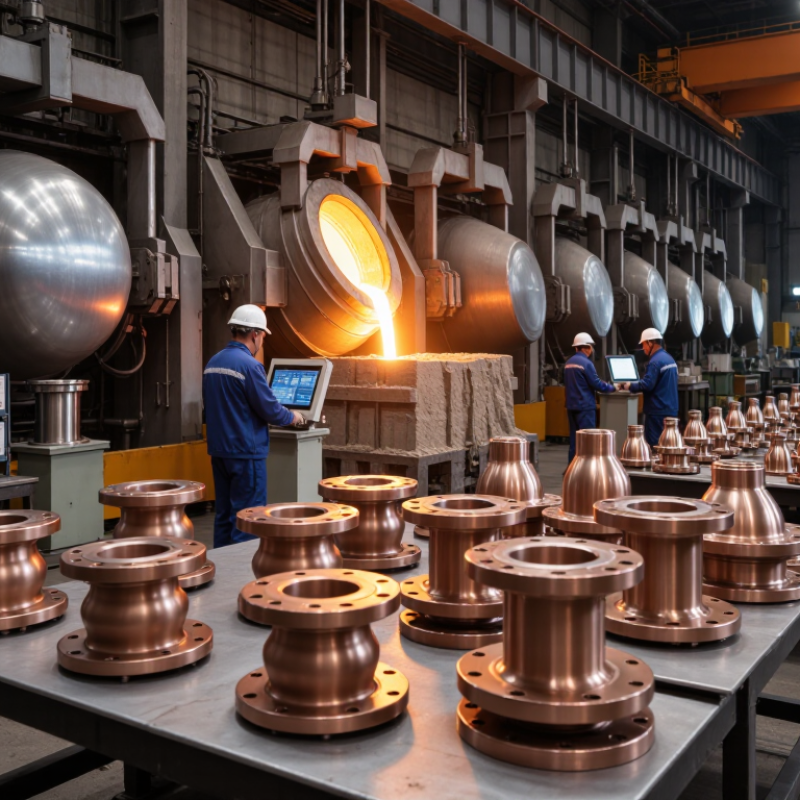
Tin bronze castings are metal components made by pouring molten copper-tin alloy into a prepared mold. Tin usually improves strength, wear resistance, and corrosion performance. The material also offers good sliding properties, making it useful for bushings, pump parts, valves, marine fittings, and heavy-duty mechanical components.
Experienced foundries control alloy composition, pouring temperature, mold condition, and cooling speed. These details affect hardness, surface quality, and internal soundness. A casting may look clean but still contain hidden porosity. That is why dimensional checks, hardness testing, and visual inspection matter. In some applications, machining allowance must be planned carefully. Too little material can ruin an otherwise suitable casting.
Tips: Ask for the alloy grade, casting process, test records, and dimensional tolerances. Confirm whether samples were inspected before mass production. Discuss the working load, temperature, lubrication, and corrosive environment with the supplier. A reliable China tin bronze castings manufacturer should explain these choices clearly, not simply promise a low price. One practical lesson is often missed: bronze selection should follow actual service conditions, not only a familiar material name. Suppliers can still make mistakes, so drawings, inspection standards, and communication should remain precise.
Renewable power is expanding rapidly, increasing demand for components that can remain reliable in demanding outdoor environments. According to *IRENA’s Renewable Capacity Statistics 2024*, global renewable capacity reached approximately 3,870 GW at the end of 2023, after a record addition of about 473 GW during the year. Solar power represented the largest share of new capacity, followed by wind and hydropower. This growth creates opportunities for zinc alloy die castings in equipment housings, cable connectors, mounting hardware, sensor supports, and other precision components.
Zinc alloys offer a practical combination of strength, dimensional accuracy, corrosion resistance, and relatively low weight. Through die casting, manufacturers can produce complex shapes with consistent tolerances and smooth surfaces, helping reduce assembly requirements while supporting long service life. These characteristics are valuable for solar tracking systems, inverter enclosures, wind-turbine control components, and hydropower monitoring devices exposed to moisture, temperature changes, and vibration. Zinc’s recyclability can also support more resource-efficient manufacturing when production scrap and end-of-life components are properly recovered.
The outlook is reinforced by *IEA’s Renewables 2024*, which projects around 5,500 GW of additional renewable capacity worldwide between 2024 and 2030, nearly three times the expansion recorded from 2017 to 2023. Solar photovoltaic and wind power are expected to account for most of this growth, increasing the need for durable, lightweight, and efficiently manufactured cast components across a wider range of renewable energy equipment.
They are metal components made by pouring molten copper-tin alloy into prepared molds. Tin improves strength, wear resistance, and corrosion performance. Useful sliding properties matter.
Common uses include bushings, shaft bearings, pump parts, valve bodies, marine fittings, gears, and worm wheels. They also suit terminals, connectors, plaques, and decorative hardware.
They resist corrosion in saltwater environments and support reliable sliding performance. However, poor design can still cause early wear. Saltwater is not harmless.
Base the choice on load, temperature, lubrication, fluid exposure, and required finish. Do not treat every bronze alloy as interchangeable. A familiar grade can still be wrong.
Alloy composition, pouring temperature, mold condition, and cooling speed affect hardness and surface quality. They also influence internal soundness and dimensional accuracy.
Yes. Hidden porosity may remain beneath a smooth surface. Visual inspection alone is unreliable. That lesson is easy to miss.
Ask for dimensional checks, hardness results, visual inspection, and material test records. For critical service, specify suitable non-destructive testing. Request sample inspection before mass production.
Machining allowance provides extra material for achieving final dimensions. Too little allowance can ruin an otherwise suitable casting. Small drawing changes may prevent expensive rework.
Provide drawings, tolerances, alloy requirements, working loads, temperatures, lubrication details, and corrosive conditions. Include inspection standards and acceptance criteria. Clear communication still needs checking.
Tin Bronze Castings are precision components produced by pouring molten tin bronze into designed molds and allowing the alloy to solidify into functional shapes. Known for their excellent wear resistance, corrosion resistance, strength, and reliable performance in demanding environments, they are widely used for bushings, bearings, gears, valves, pumps, marine components, and industrial machinery. Their combination of durability and smooth operating characteristics makes them suitable for applications requiring long service life and dimensional stability.
In China, manufacturing typically involves pattern or mold preparation, alloy melting, controlled pouring, cooling, heat treatment, machining, and final inspection. When evaluating a Chinese Tin Bronze Castings supplier, buyers should review production capacity, technical experience, material traceability, process controls, inspection equipment, and delivery reliability. Quality verification may include chemical composition testing, dimensional checks, surface inspection, mechanical testing, and non-destructive examination. Reputable suppliers should also support customized drawings, alloy grades, casting methods, machining requirements, surface finishes, packaging, and documentation to meet specific project needs.