- Home
- Products
- About Us
- Factory Tour
- FAQ
- News
- Contact Us
Leave Your Message
Cold Forged Metal Parts, which you can check out [here](https://www.metalworkmfg.com/cold-forged-metal-parts), are made by shaping metal at or just above room temperature—no melting needed. Instead of pouring molten metal into molds, this process uses controlled pressure to create strong, precise parts. You'll see the difference right on the production line; a good fastener will have consistent dimensions, smooth curves, and hardly any excess material. Plus, because it follows the grain of the metal, it can offer extra strength, especially for tough applications. That said, performance isn't just a given—it depends on factors like the alloy used, tooling design, lubrication, and the sequence of forming. Cold forging isn’t some magic trick—it’s all about the details.
Usually, experienced manufacturers will review the drawings carefully before recommending this process. They’ll check tolerances, thread specifics, wall thickness, production volume, and the loads the parts need to handle. A reputable supplier should also be able to provide material certificates, inspection reports, and traceability info for each batch. While ISO 9001 certification helps ensure consistency, it’s not a Substitute for good technical judgment or independent checks. Cold forging can cut down on machining waste and offer great repeatability, but it does have its limits. Complex shapes might need secondary processes, and hardened materials can make forming a bit more challenging. Plus, tooling costs can get pretty high for small batches, so what looks like a bargain upfront could end up being costly later on.
Testing is key—engineers should compare samples under real-world conditions like temperature changes, vibration, corrosion, and fatigue to make sure everything holds up. The goal is to find the right balance between strength, precision, cost, lead time, and long-term reliability. Even the most seasoned teams might overlook small design tweaks or choose an unsuitable material grade, which is why a practical review before moving to full-scale production is so important.
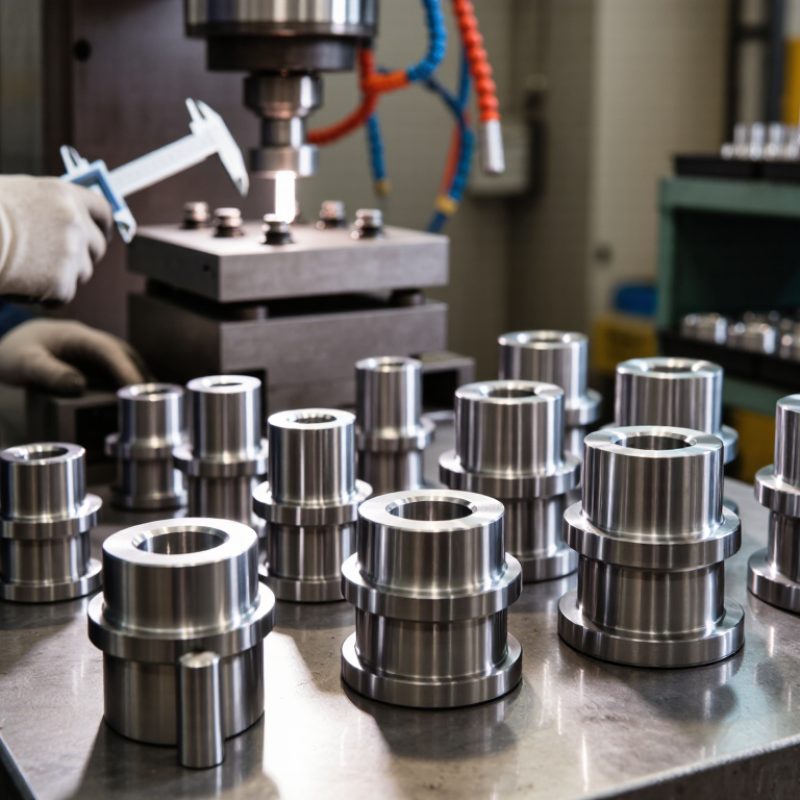
Cold forged metal parts are components shaped at or near room temperature through powerful pressing or upsetting operations. Unlike Hot Forged Metal Parts, they are formed without heating steel above its recrystallization range. This preserves a clean surface and supports tight dimensional control. A bolt head, automotive pin, or small gear may emerge with minimal machining. The metal flows rather than simply being cut away. Its grain structure follows the part’s shape, which can improve fatigue resistance in demanding applications.
The process suits ductile metals and repeatable, medium-to-high volume production. ASM Handbook, Volume 14A, identifies cold forging as a method capable of producing close tolerances and strong surface finishes. The U.S. Department of Energy also reports that near-net-shape forging can reduce machining waste by up to 50% in suitable designs. That matters when every trimmed chip represents purchased material and processing energy. Still, cold forging is not automatically superior. Tooling requires careful design, and complex shapes may need several forming stages. Tiny cracks can appear when lubrication, hardness, or deformation limits are misjudged. Real production data should guide the choice. A strong drawing is not enough. Trial parts, hardness checks, dimensional inspection, and fatigue testing reveal what the process actually delivers.
Cold forged metal parts are produced by shaping metal at or near room temperature with high-pressure dies. The process can improve material efficiency, dimensional consistency, and part strength when the material and geometry are suitable.
| Data Dimension | Typical Data or Characteristic | Why It Matters |
|---|---|---|
| Manufacturing Temperature | At or near room temperature | The absence of intentional heating helps reduce oxidation, scale formation, and heat-related dimensional changes during forming. |
| Basic Process | A metal blank is forced into a die by a press or heading machine | The die controls the final shape, allowing repeatable production of features such as heads, shoulders, recesses, splines, and threads. |
| Common Materials | Low-carbon steel, alloy steel, stainless steel, aluminum, copper, brass, and selected titanium alloys | Material selection depends on ductility, required strength, corrosion resistance, forming force, and the complexity of the part. |
| Material Utilization | Generally high, with limited scrap compared with machining from oversized stock | Most of the starting blank is displaced into the component rather than removed as chips, which can lower material waste. |
| Production Volume | Best suited to medium- and high-volume production | Tooling and die costs are spread across many parts, making the process more economical when production quantities are substantial. |
| Dimensional Consistency | High repeatability after stable tooling and process control are established | Consistent forming can reduce secondary operations and support automated assembly, although exact tolerances depend on the part, material, and equipment. |
| Surface Finish | Typically smooth and free from the heavy scale associated with hot forging | A clean formed surface can reduce finishing requirements, but lubrication, tooling condition, and material quality still affect the final appearance. |
| Work Hardening | Plastic deformation can increase local hardness and strength | Work hardening may improve performance in service, but it can also reduce ductility and increase forming forces if the deformation is excessive. |
| Grain Flow | Material flow follows the formed geometry instead of being cut across by extensive machining | Favorable grain flow can improve resistance to fatigue and impact in appropriately designed components. |
| Typical Part Examples | Fasteners, rivets, pins, shafts, sleeves, terminals, fittings, and small gear-related components | These parts commonly have rotational or axisymmetric features that can be efficiently formed in progressive or multi-station dies. |
| Key Advantages | High repeatability, good material efficiency, smooth surfaces, and improved mechanical performance | These benefits can reduce unit cost and secondary machining for suitable geometries and production quantities. |
| Main Limitations | High initial tooling cost, substantial forming force, and restrictions on material ductility and part geometry | Parts with deep cavities, large cross-section changes, very low ductility, or complex undercuts may require machining, warm forging, hot forging, or a combination of processes. |
| Design Consideration | Use gradual transitions, suitable draft, uniform wall sections, and radiused corners where possible | Forging-friendly design reduces die stress, improves metal flow, and lowers the risk of cracks, laps, and incomplete filling. |
| Quality Checks | Dimensional inspection, visual inspection, hardness testing, material verification, and selected non-destructive tests | Inspection confirms that the formed parts meet dimensional, material, surface, and mechanical requirements for their intended application. |
Note: Actual tolerances, achievable shapes, production rates, forming forces, and material limits vary with the alloy, part dimensions, tooling design, lubrication, equipment, and quality requirements.
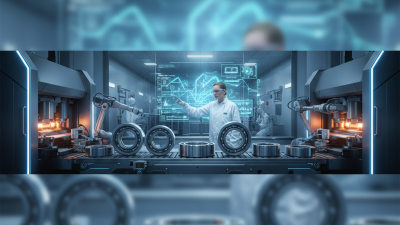
CNC turning parts for robotics and automation are precision-engineered components designed to support accurate, stable, and efficient machine movement. Manufactured with advanced CNC equipment, these parts can be produced to exact dimensions and tight tolerances, helping robotic systems maintain consistent performance during repeated operations. Common applications include robotic arms, linear modules, conveyor mechanisms, sensor mounts, drive assemblies, and compact autonomous control units that require dependable mechanical interfaces.
Made from suitable metals or engineering materials, CNC-turned components can be customized according to load requirements, installation space, surface finish, and environmental conditions. Features such as shafts, pins, bushings, threaded connectors, spacers, and couplings can be integrated into complex automation structures while maintaining smooth rotation and secure alignment. Their reliable fit reduces unnecessary vibration, supports precise positioning, and helps simplify assembly and maintenance in manufacturing, laboratory, warehousing, and research environments. With flexible production capabilities, these components can serve both prototype development and repeat manufacturing for smarter robotic systems.
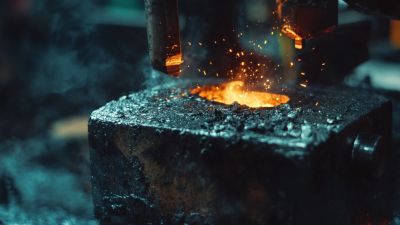
Cold forging shapes metal at room temperature using hardened dies and intense pressure. The metal moves, rather than being cut away. No melting occurs. A punch forces a prepared billet into die cavities. Common actions include upsetting, extrusion, and heading.
Engineers select a ductile alloy and calculate the required billet volume. The billet is cleaned, lubricated, and cut to a controlled length. It then passes through one or more die stations. Each station gradually forms the required geometry. Small errors in billet weight can cause large defects.
Low-carbon steel is widely used for bolts, pins, sleeves, and similar parts. Aluminum suits lightweight components but may stick to tooling. Copper provides strong electrical conductivity but can harden quickly. Brass works well for fittings and small precision parts. Titanium is possible, but development is less forgiving.
Check ductility, hardness, yield strength, and work-hardening behavior. Review the material certificate and test the actual bar stock. Alloy temper and processing history matter greatly. A datasheet alone is not enough. Test real material.
Cold forging can improve strength through favorable grain flow and work hardening. It often produces smooth surfaces and consistent dimensions. Near-net-shape forming reduces chips and raw material waste. Production cycles can be short for high-volume parts. The gains are real, but not automatic.
Yes, forged blanks may need less secondary machining. Machining can finish holes, faces, threads, or tight functional features. Near-net-shape forming may achieve material utilization above 90 percent. The final result depends on die accuracy and the required tolerances. Less machining is not always better.
Excessive material reduction can cause cracks near sharp shoulders or thin sections. Poor lubrication may create scoring, sticking, or damaged surfaces. Work hardening can increase forming pressure during later operations. Springback may affect dimensional accuracy, especially with less forgiving alloys. A perfect simulation may still miss actual friction.
Use moderate reductions during early production trials. Provide suitable bend radii and avoid abrupt section changes. Review wall thickness, die life, and press capacity together. Inspect sample cross-sections after pilot runs. A simpler shape may perform better.
Hardened dies must withstand repeated pressure and material movement. Die design affects filling, cracking, surface quality, and dimensional repeatability. Lubrication reduces friction and helps prevent stuck parts. Sample inspections can reveal wear before failures spread. Tooling costs are substantial.
Measure billet weight and length before forming. Inspect surfaces for scoring, folds, and cracks. Check critical dimensions after each trial stage. Review cross-sections for incomplete filling or hidden defects. Factory results can vary.
Cold Forged Metal Parts are components shaped from metal blanks at or near room temperature through carefully controlled pressure rather than melting. The process typically uses dies and powerful presses to form the material into precise shapes, often in one or more stages. Commonly cold-forged metals include steel, stainless steel, aluminum, copper, brass, and selected alloys, depending on their strength, ductility, and forming behavior.
The main advantages of cold forging are excellent dimensional accuracy, improved surface quality, strong mechanical performance, reduced material waste, and efficient high-volume production. These parts are widely used in transportation, electronics, machinery, construction, and industrial equipment, especially for fasteners, shafts, connectors, and other load-bearing components. When choosing them, manufacturers should consider the required shape, material properties, production volume, tolerance, strength, surface finish, tooling investment, and overall cost. Selecting the right combination helps ensure reliable performance and efficient manufacturing.