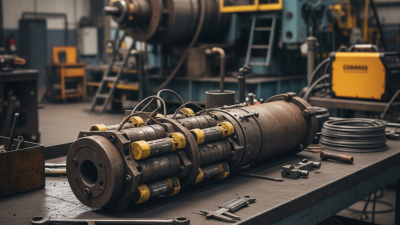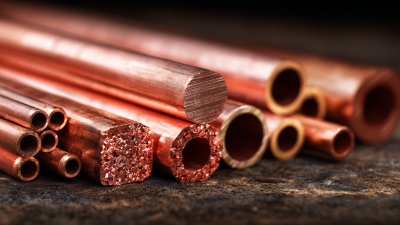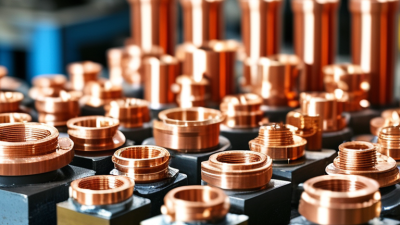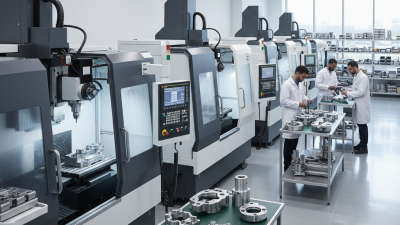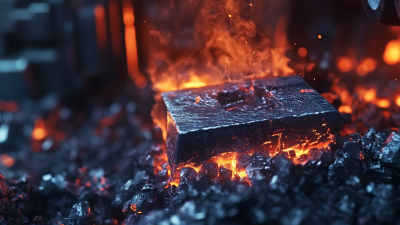
Cold Forged Fittingsare precision parts made by shaping metal without the extreme heat you'd see in hot Forging. Basically, a steel or stainless-steel blank goes into hardened dies at room temperature. Then high mechanical pressure pushes the metal into the fitting profile you need.
Dr. Taylan Altan, a well-respected forging researcher, once put it like this: “Forging is the process of shaping metal by plastic deformation.” That's really the heart of it. The blank flows inside the die instead of being cut away. Because of that, its grain structure can stay continuous around critical spots—threads, shoulders, connection points. This often means better strength and more consistent dimensions. It can cut down on material waste, too. And yes, small details matter.
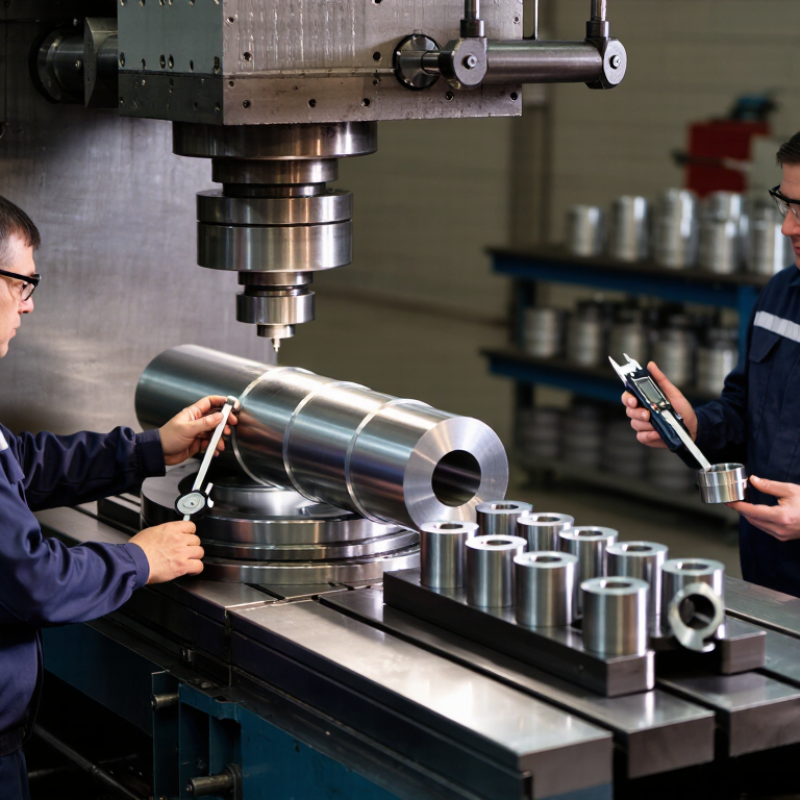
Out on the production floor, operators might check die alignment, lubricant coverage, surface finish, and final dimensions. A fitting can look perfectly fine and still fail if its bore is just a little undersized. So quality teams rely on gauges, coordinate measuring equipment, and pressure testing when the application calls for it. These checks help ensure reliable performance in plumbing, hydraulic, Automotive, and industrial systems.
Cold forging is efficient, sure—but it's not effortless. Tool wear, too much forming force, or the wrong material grade can lead to cracks or incomplete shapes. That's something worth paying attention to. Engineers have to carefully match the alloy, die design, lubrication method, and tolerance requirements. Cold Forged Fittings shouldn't be judged by appearance alone. Their reliability comes down to controlled production, documented inspection, and real-world experience from design all the way through installation.
Cold forged fittings are metal connectors shaped under high pressure, usually at room temperature. A press forces a steel, brass, or aluminum blank into a precisely machined die. The metal flows into the cavity instead of melting. This process forms elbows, tees, couplings, and adapters with consistent dimensions.
That difference matters.
Cold forging can preserve and redirect the material’s grain flow around the fitting’s shape. The result is often a dense part with good strength, clean surfaces, and limited material waste. Work hardening may also improve resistance to repeated pressure, although excessive forming can create stress. Proper lubrication and controlled tooling remain essential.
During workshop inspections, I look for sharp threads, incomplete filling, uneven shoulders, and small die marks. These details can reveal poor process control. A fitting that looks polished may still fail dimensional checks. It is an easy mistake to trust appearance alone.
Cold forged fittings should not be confused with Die-Cast Fittings. Die casting injects molten metal into a die, while cold forging reshapes solid metal. Each method suits different materials, tolerances, temperatures, and load conditions. Engineers should verify pressure ratings, thread standards, corrosion resistance, and installation requirements before selection. Actual service conditions can be less forgiving than a catalogue description.
Cold forged fittings are shaped by pressing metal into dies at room temperature. The process strengthens the grain flow and can reduce machining waste. Materials matter because each alloy responds differently under pressure, heat, and corrosion. Carbon steel is common for strong, economical connections. ASTM A105 covers forged carbon steel components for pressure service. Stainless steel grades, such as 304 and 316, provide better resistance to moisture and chemicals. The International Stainless Steel Forum reported 58.4 million tonnes of stainless crude steel production in 2023, showing the alloy’s broad industrial demand.
Brass remains useful where corrosion resistance and easy forming are important. Copper-zinc alloys also support reliable sealing in smaller fittings. Aluminum is lighter, but it needs careful design because its strength and thread durability differ from steel. Some manufacturers combine cold forging with Cnc Machined Fittings operations. Forging creates the main shape, while machining refines threads, ports, and tolerances. That hybrid approach can improve consistency, though it is not automatically better. Real workshops still find exceptions.
Tips: Check the working pressure, temperature, fluid chemistry, and joining method before choosing an alloy. Compare the supplier’s material certificate with the required ASTM or ASME specification. Look closely at threads and sealing faces under bright light. A tiny burr can cause leakage. Material charts help, but a practical sample test may reveal problems they miss.
Cold forged fittings are shaped from metal blanks at room temperature. The process uses intense pressure instead of heat to form elbows, couplings, tees, and other connection parts. A cut blank enters a precisely machined die. A punch then presses the metal into the cavity, often through several forming stages.
Each stroke changes the blank’s shape without melting it. Metal flows along the die walls, creating a more continuous grain structure than many cutting methods. This can improve strength around pressure-bearing areas. Lubrication reduces friction and helps control surface damage. Operators also monitor press force, blank dimensions, and die alignment. Small errors can produce uneven walls or incomplete filling.
Threads may be formed or machined after the main operation. End faces are often trimmed, calibrated, and inspected for size, cracks, and leakage risks. In practical production, cold forging can deliver tight tolerances and repeatable geometry. However, it is not magic. The material must have enough ductility, and complex shapes may require multiple dies. Work hardening can also make later forming difficult. Die wear gradually changes dimensions, so inspection cannot be treated as optional.
A fitting may look simple.
Its internal structure is not.
Cold forged fittings are shaped from metal blanks at room temperature. Powerful dies form the body without melting the material. This method can improve grain flow, strength, and dimensional consistency. It also creates clean surfaces around threads, shoulders, and sealing areas. The process is not perfect. Poor lubrication or incorrect die alignment can leave cracks, folds, or uneven dimensions.
Design details determine how a fitting connects. Threaded fittings use male and female threads to create a mechanical joint. A suitable sealant helps control leakage, but excessive sealant can contaminate the system. Compression fittings grip a tube with a nut and ferrule. Proper tube cutting matters. A crooked cut can prevent even sealing. Flare connections use a shaped tube end against a matching cone. They suit applications requiring reliable metal-to-metal contact.
Some cold forged fittings use brazed, welded, or push-to-connect arrangements. Each method has different installation limits. Push connections need clean, fully inserted tubing. Threaded joints need controlled torque, not brute force. Over-tightening can distort the fitting or damage the threads. I have found that visual inspection alone is insufficient. Pressure testing, dimensional checks, and leak testing provide stronger evidence of reliability. Small details matter. Temperature, vibration, fluid compatibility, and repeated assembly can change performance over time. A fitting may look flawless and still require closer testing.
| Design or Performance Dimension | Typical Information | How It Works or Why It Matters | Important Selection or Verification Point |
|---|---|---|---|
| Manufacturing Principle | Cold forging shapes a metal blank through plastic deformation at or near room temperature, usually with dies and high forming pressure. | The process forms the fitting without melting the material. Controlled deformation can produce accurate external features and favorable fiber flow around the component shape. | Confirm the material grade, heat-treatment condition, dimensional tolerances, and applicable manufacturing specification. |
| Common Fitting Forms |
| The external geometry is selected to route tubing, change direction, join different connection types, or close an unused port. | Check port orientation, tube outside diameter, thread size, envelope dimensions, and access for installation tools. |
| Typical Materials |
| Material selection affects pressure capability, corrosion resistance, temperature range, compatibility, weight, and forming behavior. | Use a material compatible with the working fluid, tube material, temperature, corrosion environment, and galvanic-contact conditions. |
| Body Geometry | Many fittings use a compact body with machined sealing surfaces and wrench flats, often including a hexagonal section. | Wrench flats allow controlled torque during assembly while the body supports the load transferred from the tube, hose, or threaded port. | Avoid gripping the sealing surface. Verify clearance for the correct wrench and the required assembly torque. |
| Internal Passage | The flow bore is designed to carry the working medium while limiting unnecessary restriction and turbulence. | A continuous or carefully blended passage reduces abrupt changes in flow direction and helps maintain predictable system performance. | Compare the fitting bore with the tube or hose bore, especially in high-flow, pulsating-flow, or pressure-sensitive systems. |
| Threaded Connection | Common thread forms include tapered pipe threads and parallel machine or tube-fitting threads, depending on the connection system. | Threads provide mechanical engagement. Sealing may occur on the thread itself or on a separate cone, face, gasket, O-ring, or bonded seal. | Never assume that threads with similar nominal sizes are interchangeable. Verify thread form, pitch, diameter, gender, and sealing method. |
| Compression Connection | A compression fitting generally uses a nut, ferrule, and fitting body to grip and seal a tube. | Tightening the nut drives the ferrule onto the tube and into the body, creating a mechanical grip and a fluid seal without welding or brazing. | Use the specified tube outside diameter and wall thickness. Follow the supplier’s installation procedure for ferrule positioning and reassembly. |
| Flare Connection | A flared tube end contacts a matching conical seat, with a nut providing the assembly force. | The mating flare surfaces create the primary seal while the nut maintains contact pressure during operation. | Inspect the flare angle, surface finish, concentricity, and tube preparation. Do not mix incompatible flare standards. |
| O-Ring Face-Seal Connection | An elastomeric O-ring is positioned in a machined groove on the fitting face and compressed against a mating face. | The O-ring supplies the primary seal, while the threaded hardware provides clamping force and mechanical retention. | Select an O-ring compound suitable for the fluid and temperature. Check groove condition, compression, lubrication, and replacement requirements. |
| Hose or Push-In Connection | Some fittings use a barb, sleeve, or gripping mechanism to connect flexible tubing or hose. | The fitting retains the hose mechanically while the hose material seals against the fitting surface; clamps may be required depending on the design. | Match the fitting to the hose inner diameter, pressure rating, temperature range, chemical compatibility, and required retention method. |
| Pressure Capability | Pressure ratings vary widely with material, size, wall geometry, connection type, temperature, and duty cycle. | The fitting must withstand internal pressure, external loads, vibration, thermal expansion, and pressure pulsation without leakage or rupture. | Use the rated working pressure—not only burst pressure—and apply any derating required for temperature, fluid, tube size, or cyclic service. |
| Temperature Capability | Metal body limits are influenced by alloy and heat treatment, while seals and tubing often determine the practical system limit. | Temperature changes can alter material strength, seal elasticity, thermal expansion, and preload at the connection. | Review the complete temperature range, including startup, shutdown, cleaning, ambient exposure, and short-term excursions. |
| Leak-Prevention Features | Typical features include precision seats, ferrule geometry, O-ring grooves, controlled thread engagement, and smooth sealing surfaces. | These features create either a metal-to-metal seal, an elastomeric seal, or both, while maintaining contact during vibration and pressure changes. | Keep sealing surfaces free of scratches, chips, dirt, excess sealant, and burrs. Replace damaged seals and deformed components. |
| Installation Method | Installation may involve tube cutting, deburring, cleaning, insertion to a defined depth, hand tightening, and final torque or turn control. | Correct assembly establishes the intended contact pattern and prevents under-tightening, over-tightening, tube damage, or seal extrusion. | Use calibrated tools where required. Support the tube and avoid forcing misaligned components into position. |
| Applicable Standards | Depending on the design, relevant standards may cover hydraulic tube fittings, pipe threads, dimensional requirements, pressure testing, or material specifications. | Standards establish consistent dimensions, thread forms, performance tests, interchangeability requirements, or acceptance criteria. | Verify the exact standard and revision specified by the application; a fitting that matches visually may still be dimensionally incompatible. |
| Advantages of Cold Forging |
| Reduced material waste and consistent forming can support compact, repeatable fitting designs when the process and material are properly controlled. | Performance depends on tooling, lubrication, forming sequence, post-forging machining, inspection, and quality control—not on the process name alone. |
| Limitations and Risks |
| Improper process control can cause laps, cracks, dimensional variation, thread defects, or distortion that may compromise sealing and fatigue performance. | Require appropriate inspection, including dimensional checks, surface examination, pressure or leak testing, and traceability where the application demands it. |
| Best-Fit Applications | Common uses include hydraulic power units, instrumentation lines, pneumatic equipment, process systems, mobile machinery, and general fluid transfer. | The compact form and multiple connection options support reliable routing in systems where space, vibration resistance, and serviceability are important. | Select the fitting based on the complete system design rather than pressure alone, including vibration, motion, corrosion, cleanliness, and maintenance access. |
Cold forged fittings perform differently from machined parts because the metal is shaped under high pressure, not cut away. This process follows the material’s grain flow and creates work hardening near the surface. In pipe assemblies, that can improve resistance to vibration, thread wear, and repeated tightening. ASM Handbook, Volume 14A, reports material utilization above 80% for many cold-forming operations, while machining from bar may leave substantially more scrap. That efficiency matters in high-volume Industrial fittings production.
On a working line, performance depends on more than strength. A forged elbow must maintain clean threads, accurate seating faces, and stable dimensions after plating or heat treatment. Field technicians often check for burrs, galling, and leakage around the first engaged thread. Small defects become obvious under pressure. ISO 898-1 test data also shows why tensile strength and proof-load testing matter for carbon-steel fasteners and related components. The fitting may look perfect, yet fail if forming cracks remain beneath the surface.
Cold forged fittings suit hydraulic equipment, compressed-air lines, and structural connections where repeated loads are expected. Their dense surface can resist local deformation, but corrosion protection still requires careful control. The 2023 ASM materials data emphasizes that lubrication, die condition, and forming temperature strongly affect defects and dimensional accuracy. Real installations are less tidy than laboratory samples. Misalignment, over-torquing, and mixed metals can reduce service life. This is where inspection records and installer experience remain essential. 马会
Cold-forged fittings are formed by shaping metal under high pressure without melting it. This process can produce a dense grain structure, accurate dimensions, and reliable resistance to pressure when the fitting is correctly selected, installed, and used within its material and temperature limits.
How to read the chart: ASME B16.11 identifies forged socket-welding and threaded fittings using pressure-class designations of 2,000, 3,000, 6,000, and 9,000. These figures are class designations, not universal allowable working pressures. Actual service pressure depends on material grade, temperature, wall thickness, connection type, corrosion allowance, and the applicable pressure-design code.
Cold forged fittings are metal connectors shaped at room temperature under high pressure. The process forces steel or another suitable alloy through dies without melting it. This can preserve grain flow and create strong, compact valve fittings with accurate dimensions.
Their benefits are practical.
Cold forging usually produces smooth surfaces and consistent threads. It also reduces material waste compared with machining from solid bar. In field inspections, well-made fittings often show clean edges, uniform wall thickness, and dependable pressure performance. They suit hydraulic lines, instrumentation systems, and compact piping assemblies. Small details matter.
The limitations deserve equal attention.
Complex shapes may require several forming steps or later machining. The process also needs expensive tooling and powerful equipment. Work hardening can improve strength, but it may reduce ductility if the design is poorly controlled. Selection should consider pressure, temperature, corrosion exposure, thread type, and alloy compatibility. Confirm the required dimensional and inspection standards before ordering. A fitting that looks perfect can still leak. I have seen errors begin with mismatched threads, not weak metal. Installation space matters too, especially around valves and tight bends. Request material certificates, pressure data, and traceability records when reliability is critical. Yet paperwork cannot replace a practical fit check.
They are metal connections shaped inside dies at room temperature. Common forms include elbows, tees, and couplings.
A punch presses a metal blank into a die cavity. Several forming stages may create the final shape.
Carbon steel offers strength and economy. Stainless steel resists moisture and chemicals. Brass forms easily, while aluminum reduces weight.
Check pressure, temperature, fluid chemistry, and the joining method. Material selection should match the actual service environment.
Often, yes. The process keeps more metal in the fitting and removes less material than extensive machining.
Not automatically. Grain flow and work hardening can help, but cracks, poor alignment, or wrong material can weaken performance.
Threads control engagement and tightening. Sealing faces prevent leakage. A tiny burr can cause trouble.
Sometimes. Machining can refine threads, ports, and tolerances after forging. The combined method is useful, but not always better.
Inspect cracks, burrs, galling, uneven walls, and incomplete filling. Check dimensions under bright light.
Misalignment, over-tightening, mixed metals, and poor sealing can shorten service life. Installation details matter.
Cold Forged Fittings are connection components formed from metal at room temperature, using controlled pressure rather than heat to shape the material. This process helps preserve the metal’s strength, produces accurate dimensions, and creates a dense, reliable structure. Common materials include stainless steel, carbon steel, aluminum, copper alloys, and other metals selected according to pressure, temperature, corrosion, and service requirements. During production, the material is pressed through carefully designed dies to create shapes such as elbows, tees, couplings, and adapters with consistent wall thickness and smooth surfaces.
Their design may include threaded, socket-weld, compression, or other connection methods chosen for installation needs and system conditions. In real applications, Cold Forged Fittings are valued for durability, dimensional consistency, leak resistance, and suitability for demanding fluid or gas systems. However, they may involve higher tooling costs, size limitations, and material or design constraints. Proper selection should consider compatibility, pressure ratings, operating temperature, corrosion exposure, connection type, inspection requirements, and long-term maintenance.