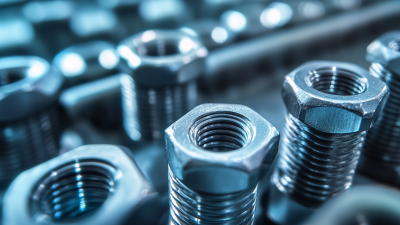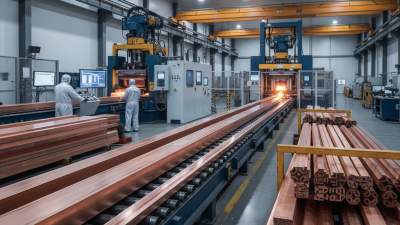
When you're choosing Cold Forged Fasteners for sourcing worldwide, it's really about more than just looking at the unit prices. These parts are made under high pressure, which often results in strong threads, uniform sizes, and efficient material use. But honestly, how well they perform depends on a bunch of factors—like the steel grade, the precision of the tooling, heat treatment processes, coatings, and inspection routines. For example, a stainless steel screw that you use outdoors needs different protection compared to a heavy-duty bolt used in machinery. Essentially, the application really decides what specifications you should look for.
Details definitely matter here. Seasoned buyers usually dig into material certificates, hardness tests, tensile results, thread gauges, and traceability records for each lot. Doing a supplier audit can also give you a good idea if their inspection equipment is properly calibrated and if their operators stick to procedures. While standards like ISO, ASTM, ASME, or DIN can help guide your specifications, you’ll want to make sure your purchase order clearly spells out exactly what you need. Just getting a certificate isn’t enough to guarantee consistent quality—that’s a common mistake people make.
Beyond just the engineering specs, it’s important to check some practical stuff too—things like Packaging, labeling, how they protect shipments, lead times, ownership of tooling, and communication processes. A solid supplier won’t just make promises; they’ll be honest about their production limits. And before you place a big order, testing a sample is key—it’s the best way to catch problems early, before thousands of parts end up in your warehouse. Of course, no checklist is perfect. Variations in coating, mixed batches, or last-minute design tweaks can still pose risks.
This guide is all about helping you compare suppliers effectively, verify quality, keep costs under control, and build a reliable process for sourcing cold forged fasteners internationally. The whole idea is to get the right parts the first time, without surprises.
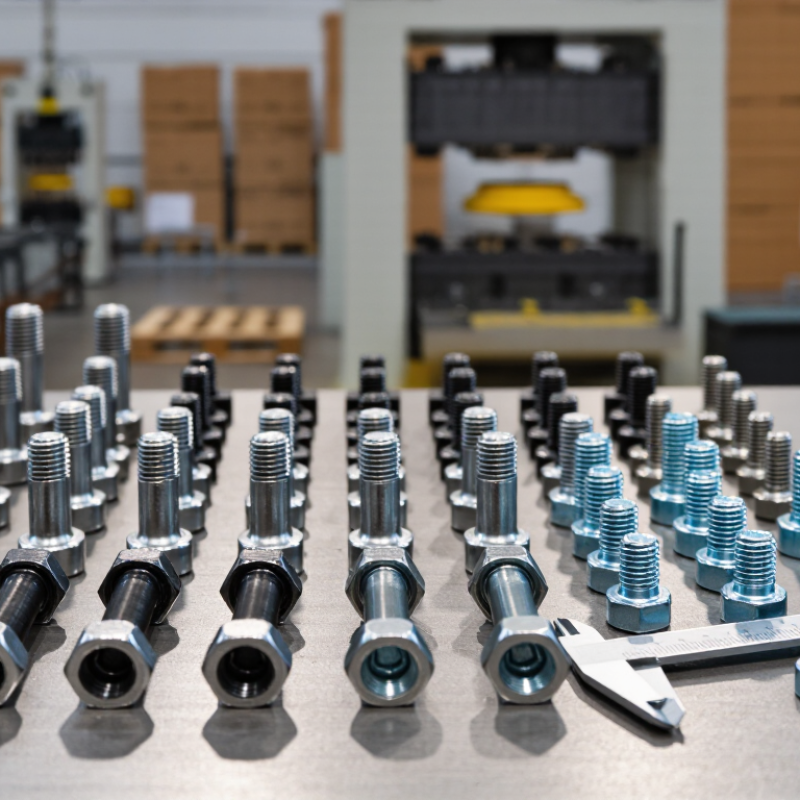
Cold forged fasteners are screws, bolts, nuts, and studs shaped from metal wire at room temperature. Powerful dies compress the material into a precise form. This process improves grain flow and usually creates strong, consistent parts with minimal waste. The surface often looks clean, with sharp threads and accurate heads. However, cold forming cannot solve every design problem. Very complex shapes may require machining or additional operations.
These fasteners support many industries, including automotive, construction, machinery, electronics, and renewable energy equipment. Cold Forged Automotive Fasteners are commonly used in engine assemblies, braking systems, suspension components, and body structures. Their strength-to-weight ratio helps reduce material use. For global sourcing, buyers should review material grades, dimensional tolerances, corrosion protection, and inspection records. Ask for sample parts, test reports, and production traceability. A reliable supplier should explain tooling limits clearly, not promise everything.
Tips: Match the fastener to the load, temperature, and environment. Confirm thread dimensions with drawings, not assumptions. Check coating performance through relevant corrosion tests. Packaging also matters; damp cartons can damage otherwise suitable parts. I have seen projects delayed by unclear standards and small tolerance differences. That lesson is easy to overlook. A practical sourcing review should compare approval samples, batch consistency, and communication speed before large-volume production. Mistakes still happen, so leave room for corrective testing.
Selecting cold forged fasteners starts with the actual load, not the catalog description. Define tension, shear, preload, fatigue, and vibration conditions before comparing suppliers. A joint carrying 12 kN needs more than a matching diameter. Its clamp force, thread engagement, and tightening method also matter.
Shortcuts can fail.
Review the assembly environment in detail. Outdoor equipment may face rain, salt spray, dust, and daily temperature changes. Indoor machinery may still experience oil, cleaning chemicals, or heat near motors. Specify the required material, surface treatment, corrosion resistance, and operating temperature range. A bright finish does not automatically mean long service life. Test evidence matters more than appearance.
Performance requirements should be measurable. Request dimensional inspection records, hardness results, tensile data, coating thickness, and batch traceability. Confirm thread accuracy with suitable gauges, especially when parts come from different production regions. Packaging deserves attention too; poorly protected threads can arrive damaged after a long shipment. Global sourcing adds variation in standards, terminology, and documentation quality.
A specification can still be wrong.
Recheck the design with the assembler and maintenance team. They may reveal repeated loosening, difficult tool access, or excessive installation time. It is also wise to approve samples before placing a large order. Sample results may expose assumptions that drawings hide, including plating buildup or unsuitable tolerances. Reliable decisions combine engineering calculations, physical testing, supplier records, and practical feedback from the finished assembly.
Choosing cold forged fasteners for global sourcing starts with the material. Carbon steel suits general structural applications, while alloy steel offers better strength under repeated loads. Stainless steel helps resist moisture, salt, and chemical exposure, but its higher cost needs justification. Do not select a grade from a catalog alone. Match tensile strength, yield strength, hardness, and temperature requirements with the assembly design.
Cold forging creates accurate threads and consistent dimensions with limited material waste. However, the selected grade must support forming without hidden cracks. Ask suppliers for mill certificates, chemical analysis, mechanical test results, and batch traceability. Hot-Forged Pole Line Fasteners are a different product category. Their larger sections and forming process may suit heavy utility structures, but they should not replace cold forged parts without engineering approval. Small differences matter.
Protective finishes should match the environment, not simply the lowest quotation. Zinc-based coatings work for many outdoor applications, while thicker systems may be needed near coastal areas. Check coating thickness, adhesion, hydrogen-related risks, and torque performance after finishing. Run salt spray tests when exposure is severe, but do not treat them as a complete prediction of service life. Real assemblies include scratches, trapped water, and uneven tightening. A perfect specification can still fail in the field. I have found that packaging is often overlooked. Use dry, separated cartons and inspect for white corrosion before shipment. Some assumptions need reconsideration.
Minimum tensile strength by internationally recognized fastener grade, with typical protective-finish options to evaluate during sourcing.
Higher-strength grades can support greater mechanical loads, but material selection should also consider temperature, corrosion exposure, installation torque, and hydrogen-embrittlement risk. Zinc electroplating is commonly evaluated for general indoor or moderate environments, while zinc-flake systems are often considered for higher corrosion resistance. A2 and A4 stainless grades are passivated to improve surface corrosion resistance; A4 is generally selected for more demanding chloride environments. Strength values shown are minimum tensile-strength requirements from ISO 898-1 and ISO 3506-1, not guaranteed production averages.
Global sourcing starts with a dimensional comparison, not a low unit price. Cold forged fasteners may follow ISO, DIN, ASTM, or national specifications. These systems can differ in thread pitch, head dimensions, tolerances, and marking rules. ISO 4014 covers hexagon head bolts, while ISO 898-1 defines mechanical properties for carbon and alloy steel fasteners. ASTM specifications often emphasize material performance and testing. They are not automatic equivalents.
A practical sourcing review should compare thread size, pitch, nominal length, under-head radius, across-flats dimension, coating thickness, and tolerance class. For example, a metric M10 coarse thread uses a 1.5 mm pitch, while a fine-thread version may use 1.25 mm. That difference affects assembly torque and load behavior. The 2024 World Steel Association Short Range Outlook forecast global steel demand at about 1.75 billion tonnes. Material availability may improve, but grade consistency still requires verification. I have seen dimensionally similar bolts fail inspection because the thread standard was assumed, not confirmed. Small assumption. Expensive correction.
Tips: Request a controlled drawing with the exact standard edition, grade, thread class, surface treatment, and inspection points. Ask for first-article samples and dimensional reports. Compare gauges, not photographs. EN 10204 inspection documents can support traceability, but paperwork alone cannot prove fit. Review sampling plans under ISO 2859-1, and keep critical dimensions separately recorded. A second technical review is worthwhile, even when the supplier appears experienced.
| Sourcing Dimension | Metric / ISO Route | Inch / ASME Route | Representative Specification | Cold-Forging and Inspection Notes |
|---|---|---|---|---|
| Product geometry | ISO 4014: hexagon head bolts with partial thread ISO 4017: hexagon head screws with full thread | ASME B18.2.1: inch-series square and hex bolts and screws | Define head style, thread length, washer face, point type, and nominal length under the head. | Cold forging is suitable for repeatable headed parts; verify die fill, head concentricity, under-head radius, and thread run-out. |
| Thread system | ISO 68-1 profile; ISO 261 preferred general metric series; ISO 965-1 tolerance principles | ASME B1.1 Unified Inch Screw Threads | Metric example: M10 × 1.5 – 6g Inch example: 3/8-16 UNC-2A | Specify nominal diameter, pitch or threads per inch, tolerance class, thread length, and whether the thread is rolled or cut. |
| Common metric thread sizes | Coarse pitch series commonly used for general fastening | Not applicable; use a separate Unified thread designation. | M6 × 1.0; M8 × 1.25; M10 × 1.5; M12 × 1.75; M16 × 2.0 | Confirm pitch rather than assuming coarse thread. Fine-pitch alternatives may require different tooling and gauges. |
| Common inch thread sizes | Not applicable unless a metric conversion is specifically approved. | UNC coarse series commonly used for general assembly | 1/4-20 UNC; 5/16-18 UNC; 3/8-16 UNC; 1/2-13 UNC | The number after the dash is threads per inch. Do not substitute metric threads based only on similar outside diameter. |
| Hexagon across-flats dimensions | Typical ISO 4014 / ISO 4017 dimensions for standard hex heads | Use the applicable ASME B18.2.1 dimensional table. | M6: 10 mm; M8: 13 mm; M10: 16 mm; M12: 18 mm; M16: 24 mm | Across-flats values can vary by product series or reduced-head design. State the governing product standard on the drawing. |
| Dimensional tolerances | ISO 4759-1 for product grades and dimensional tolerances of fasteners | Use the dimensional limits specified by the applicable ASME product standard. | Select the product grade and tolerance class before approving samples. | Measure critical features with calibrated gauges: diameter, length, head height, across flats, concentricity, and thread limits. |
| Carbon and alloy steel strength | ISO 898-1 property classes for carbon steel and alloy steel bolts, screws, and studs | ASTM F606/F606M test methods are commonly used with applicable inch fastener specifications. | Class 8.8: nominal tensile strength 800 MPa; nominal yield ratio 0.8 Class 10.9: nominal tensile strength 1,000 MPa; nominal yield ratio 0.9 | Do not select class by hardness alone. Require tensile, yield or proof-load, hardness, and thread-stripping results as applicable. |
| Stainless steel strength | ISO 3506-1 for bolts, screws, studs, and similar fasteners made from corrosion-resistant stainless steels | Use the specified ASTM stainless fastener material and property requirements when an inch-series design is required. | A2-70 or A4-70: minimum tensile strength 700 MPa A2-80 or A4-80: minimum tensile strength 800 MPa | Stainless cold forming may increase work hardening. Check galling risk, magnetic expectations, corrosion environment, and actual lot properties. |
| Material and heat treatment | Material and heat-treatment requirements are selected according to ISO 898-1 or ISO 3506-1. | Specify the relevant ASTM or ASME material and mechanical-property requirements. | Typical high-strength steel production may include cold heading, thread rolling, quenching, and tempering. | Request heat-treatment records, chemical analysis, decarburization checks, and traceability to the raw-material lot. |
| Thread manufacturing method | ISO thread profile and tolerance requirements | Unified thread profile and tolerance requirements under ASME B1.1 | Rolled thread preferred for high-volume cold-forged fasteners where the design and material permit it. | Verify pitch diameter, major diameter, flank condition, thread length, and gauge acceptance. Rolling does not replace final dimensional inspection. |
| Coating and corrosion protection | ISO 4042 for electroplated coating systems on fasteners; ISO 10683 for non-electrolytically applied zinc-flake coatings | Specify the coating standard, coating thickness, corrosion requirement, and torque-tension condition. | Example requirement: zinc-based coating with controlled thickness and documented neutral salt-spray performance. | For high-strength steel, assess hydrogen embrittlement risk. Check thread fit after coating and avoid relying on salt-spray hours alone. |
| Marking and identification | ISO 898-1 and ISO 3506-1 define relevant marking principles for property class and material designation. | Use the marking rules in the applicable inch fastener specification. | Marking may include manufacturer identification where required, property class, and material grade. | Confirm that markings remain legible after coating and correspond to the inspection certificate and packaging label. |
| Inspection and acceptance | Use ISO 3269 for acceptance inspection principles when applicable, together with the product and material standards. | Define sampling and acceptance criteria using the purchase specification and applicable ASME/ASTM requirements. | A practical inspection plan includes visual inspection, dimensional checks, thread gauging, hardness, tensile or proof load, and coating verification. | Agree on lot definition, sampling level, nonconformance handling, inspection responsibility, and document retention before production. |
| Recommended purchase-order description | Example: Hexagon head screw, ISO 4017, M10 × 1.5 × 50, property class 10.9, ISO 898-1, tolerance 6g, specified coating. | Example: Hex cap screw, ASME B18.2.1, 3/8-16 UNC × 2 in, specified material, strength, and finish. | Always state standard, size, pitch or TPI, length, material, property class, finish, tolerance, packaging, and inspection documents. | A complete designation prevents substitutions that appear dimensionally similar but differ in strength, thread fit, coating, or head geometry. |
Choosing cold forged fasteners for global sourcing starts with the supplier, not the quotation. For Pole Line Fasteners, confirm the factory controls material selection, die design, forming pressure, heat treatment, and surface finishing. Ask for production records, not broad promises. A capable supplier should explain how it prevents cracks, thread damage, and dimensional drift during high-volume production.
Quality systems reveal daily discipline. Review the supplier’s ISO 9001 system, inspection plans, calibration records, and nonconformance procedures. Request sample material certificates and lot traceability from steel coil to packed cartons. Check whether operators use gauges at defined intervals. Small details matter. A clean inspection room means little if rejected parts return to production without investigation.
Certifications can support trust, but they do not replace evidence. Verify certificate scope, issuing body, expiration date, and covered manufacturing site. Depending on the application, ask about ISO 14001, ISO 45001, or industry-specific approval requirements. Independent audits and witnessed testing add useful confidence. Still, no supplier is perfect. I would also examine one failed batch and its corrective action. That conversation may reveal more than a polished presentation. Allow room for uncertainty, document open risks, and agree on measurable acceptance criteria before the first shipment.
Start with traceable samples, not attractive quotations.
Cold Forgings/Cold Forged Parts should match the approved drawing, material grade, thread class, and surface finish. Request samples from the intended production line. Check head dimensions with calibrated gauges. Measure thread fit using matching go and no-go gauges. Ask for heat-lot identification and material certificates. Independent tensile, hardness, dimensional, and salt-spray testing can expose weak assumptions. ASTM-based procedures improve comparability, but test conditions must match the application. Samples must earn trust. Do not guess. A supplier’s polished report is useful, yet raw test data, laboratory accreditation, and failed-sample records matter more. I have seen minor burrs damage assembly speed, although the fastener passed a basic strength test.
Packaging deserves equal attention.
Specify quantity per inner bag, moisture barriers, carton limits, pallet height, labels, and barcode readability. Photograph the packed cartons before loading. Include desiccant when sea exposure is likely. The World Bank’s Logistics Performance Index 2023 reports that shipments can spend about 44 days between export and import in international logistics. That delay can amplify corrosion, shortages, and documentation errors. Use shock-resistant cartons and clear lot separation. Confirm the commercial invoice, packing list, country of origin, and transport marks before dispatch. The United Nations Conference on Trade and Development reported continued disruption risks in maritime transport during 2023. Build buffer time into production planning. My own checklist is not perfect; packaging tests can miss rough handling at smaller transfer points. Recheck critical loads with drop, vibration, and humidity trials before committing to repeat orders.
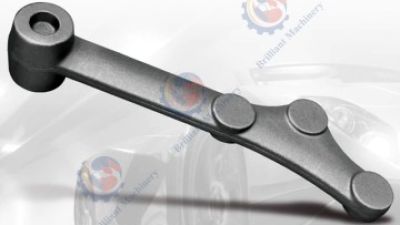
Hot-forged automotive steering and suspension arms play a critical role in maintaining accurate vehicle control, stable wheel alignment, and dependable load support. Middle steering arms, steering arms, and lower swing arms are engineered to withstand the demanding forces generated during steering, braking, cornering, and uneven-road driving. Their carefully developed shapes help distribute mechanical stress across key connection points, supporting smooth movement and consistent suspension performance.
Produced through advanced hot-forging technology, these components offer high tensile strength and strong resistance to fatigue. The forging process creates a dense, durable structure that helps the arms endure repeated impact, vibration, and changing loads without compromising their functional integrity. This durability is especially valuable in vehicles operating under heavy-duty conditions, where steering accuracy and suspension stability directly influence driving safety.
Designed for both OEM and aftermarket applications, the components are suitable for a wide range of vehicle repair, replacement, and assembly requirements. Precise compatibility with related steering and suspension parts supports reliable installation and proper alignment. By combining structural strength, long service life, and dependable performance, hot-forged arms help maintain responsive handling and secure vehicle operation in demanding environments.
They are screws, bolts, nuts, and studs formed from metal wire at room temperature. Powerful dies compress the wire into precise shapes. The process usually improves grain flow, thread accuracy, and production consistency. It also creates little material waste.
They support automotive, construction, machinery, electronics, and renewable energy equipment. Typical uses include engine assemblies, braking systems, suspension parts, and structural joints. Their strength-to-weight ratio can reduce material use. The correct application still depends on load and environment.
Review tension, shear, preload, fatigue, vibration, and tightening conditions. A 12 kN joint needs more than a suitable diameter. Check clamp force, thread engagement, and installation torque. Shortcuts fail.
Consider rain, salt spray, dust, oil, cleaning chemicals, and temperature changes. Outdoor parts may need stronger corrosion protection. Indoor machinery can still face heat and chemical exposure. A bright surface does not prove long service life.
Carbon steel suits many general structural uses. Alloy steel offers higher strength under repeated loading. Stainless steel helps resist moisture, salt, and chemicals. Compare tensile strength, yield strength, hardness, and temperature limits with the design. Cost matters, but it should not lead the decision.
Request material certificates, chemical analysis, mechanical test results, and batch traceability. Also ask for dimensional records, hardness results, coating thickness, and tensile data. Use sample parts and suitable thread gauges. A supplier should explain tooling limits clearly.
Match the finish to the actual environment. Zinc-based coatings may suit ordinary outdoor exposure. Coastal conditions may require thicker or more durable protection. Check adhesion, thickness, torque performance, and possible hydrogen-related risks. Salt spray testing helps, but it cannot predict every field condition.
Damp cartons can damage suitable fasteners during shipment. Use dry packaging and separate parts to protect threads. Inspect for white corrosion before production approval. Samples may reveal plating buildup or tolerance problems hidden in drawings. I may overlook small differences too. That is why corrective testing deserves space.
Choosing Cold Forged Fasteners for global sourcing requires a structured evaluation of technical, quality, and supply chain factors. Start by understanding how cold forged fasteners are made and where they are used, then define the required load capacity, operating temperature, corrosion exposure, vibration resistance, and service life. Select appropriate materials and grades, along with protective finishes that match the application environment. It is also essential to compare applicable manufacturing standards, thread forms, tolerances, dimensions, and compatibility requirements before placing an order.
A reliable sourcing decision should include a careful review of the supplier’s production capabilities, inspection procedures, quality management systems, and relevant certifications. Request samples and verify test results for strength, hardness, dimensions, coating performance, and consistency. Finally, assess packaging methods, labeling, lead times, shipping arrangements, and communication practices to reduce damage, delays, and misunderstandings. By combining engineering requirements with supplier due diligence, buyers can establish a dependable international supply program and select fasteners that deliver consistent performance throughout their intended service life.