Contact us
Leave Your Message
0%

Cold forged metal parts are pretty much the go-to choice when you need something tough for Automotive, electronics, medical gear, or industrial machinery. And honestly, their appeal is all about practicality. You see, forming at room temperature lets you hit tight tolerances, get smooth surfaces, and maintain strong grain flow—without wasting a ton of material. That said, it's not like it's easy. You still need precise tooling, proper lubrication, and solid press control to pull it off.

So, I was looking at some market reports the other day, and the numbers on metal Forging are pretty staggering. Fortune Business Insights, for instance, they've pegged it at about USD 40.39 billion back in 2023. And their outlook suggests it's only going to climb through 2032—largely thanks to the steady demand from transportation and all that heavy-duty industrial equipment. I've also seen similar chatter from Grand View Research, who point to lightweight components and smarter manufacturing techniques as the real game-changers here. One thing that's easy to miss though is that these figures aren't just about cold forging; they cover the whole forging landscape, which is a big distinction when you're trying to make sense of the industry. Anyway, it's definitely a sector worth watching.

Look, here's the thing—Taylan Altan, a forging specialist, once said that forging is basically squashing metal into a shape using compressive forces. That's still a pretty solid way to think about it when you're sizing up suppliers. You see, a good manufacturer isn't just about cranking out parts; they've got to have real know-how in die design, know their alloys inside and out, and be spot-on with inspection and traceability. Plus, they need to deliver the goods time after time without messing up.

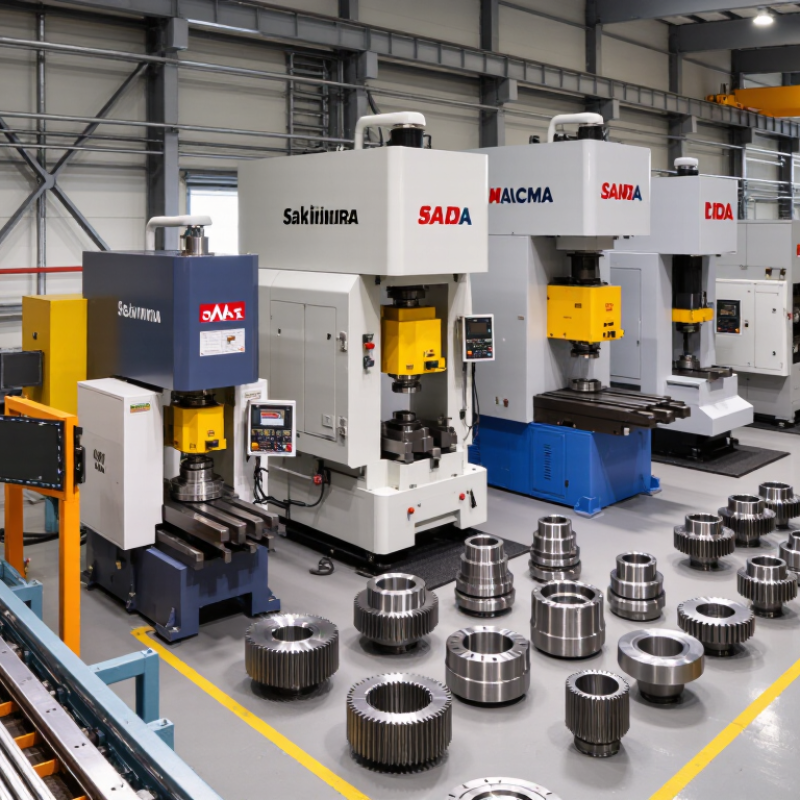
So, this guide takes a look at seven well-known manufacturers from around the world—think National Machinery, Sakamura Machine, SACMA Limbiate, Nakashimada, AIDA, Yamanaka, and Chun Zu. We picked them based on things like what their equipment can do, how much forming experience they've got, their quality systems, and whether they offer solid global support. Now, don't get me wrong—no ranking is ever perfect. What works great for one company might completely miss the mark for another, depending on your region, the material you're working with, how big your order is, or just how risky the application feels. So take it with a grain of salt. Before you pull the trigger on a purchase, it's worth double-checking a few things: current certs, sample parts, testing records, and maybe even talking to some existing customers. Seriously, the little things count. A clean thread, consistent head geometry, stable hardness – these can make or break how those cold forged parts actually hold up in the real world.
7 Best Cold Forged Metal Parts Manufacturers Worldwide

What Cold Forged Metal Parts Are and How the Process Works

Cold forged metal parts are shaped at or near room temperature, rather than melted. A cut wire blank enters a hardened die. A punch then compresses it with intense pressure. Metal flows into the cavity, forming features such as heads, shoulders, splines, and threads. Several hits may be required for complex geometry. Trimming, thread rolling, cleaning, and inspection follow the forming stage.

The method creates strong grain flow and often reduces material waste. It also offers repeatable dimensions for high-volume components. The World Steel Association reported 1.89 billion tonnes of crude steel production in 2023. That huge supply supports cold forming, but material selection remains critical. Hard alloys can damage dies or demand extra forming steps. Hot Forged Metal Parts use heated billets and suit larger or more complex shapes. Cold forging leaves the surface cleaner, yet it cannot solve every design problem. In practice, die wear and springback still require attention.

Tips: Specify the alloy, hardness range, tolerance, and annual volume before tooling. Ask for a forming simulation when the part has thin walls or sharp transitions. Check first-piece dimensions with calibrated gauges. Lubrication also matters; a dry-looking die can produce scratches, cracks, or unstable loads. Engineers sometimes focus on press capacity and overlook die alignment. That is an avoidable mistake. A small setup error can become thousands of rejected parts.

Key Factors for Evaluating Cold Forged Parts Manufacturers

Selecting cold forged parts manufacturers requires more than comparing prices. Start with documented experience in the target alloy, geometry, and annual volume. Ask for sample parts, process sheets, and dimensional inspection records. A polished website proves little. Reliable manufacturers explain how billet preparation, lubrication, and die maintenance affect consistency. Their engineers should discuss grain flow, filling behavior, and springback with practical examples. Request evidence from recent, comparable production runs.

Technical capability should match your drawing, not merely the supplier’s equipment list. Check press capacity, tool life, secondary operations, and tolerance control. For complex Cnc Metal Parts, clarify whether machining follows forging and how datums are preserved. Review material certificates, hardness results, surface checks, and final inspection methods. Traceability matters when one batch contains thousands of small components. Ask how nonconforming pieces are isolated, recorded, and corrected. Small details matter.

Evaluate communication during sampling, especially when dimensions drift or tooling needs revision. A dependable partner reports problems early, without hiding behind vague delivery updates. Visit the facility if possible, or request a live remote audit. Observe calibration labels, clean storage, operator training, and identification on work-in-process bins. Capacity claims can be optimistic; verify actual shifts, maintenance planning, and subcontracted processes. No evaluation method is flawless. Strong records can still miss weaknesses during peak production. Compare pilot-run data against mass-production results before approving regular orders.

Leading Cold Forged Metal Parts Manufacturers Worldwide

Leading Cold Forged Metal Parts Manufacturers Worldwide

Leading cold forged metal parts manufacturers serve automotive, electrical, construction, and industrial equipment markets. Their strongest advantage is repeatable production at high volumes. A cold-forged bolt can emerge near its final shape, reducing cutting, scrap, and cycle time. The International Energy Agency reports that industry remains a major global energy consumer, making material-efficient forming increasingly important. That pressure is real.

Reliable manufacturers usually combine multi-station presses, controlled tooling, and in-process inspection. Look for documented tensile strength, hardness, dimensional capability, and traceability. The ISO 9001 quality framework supports consistent processes, but certification alone proves little. A factory floor matters more. Inspectors should examine die wear, lubrication control, and sampling records beside the production line.

Trade data from UN Comtrade shows the enormous international movement of fasteners and precision metal components. This supports a broad supplier base, but comparisons can become misleading. Some manufacturers publish impressive capacity figures without explaining utilization, tolerances, or defect rates. Ask for capability studies, material certificates, and sample inspection reports. Production experience matters too: experienced teams recognize surface cracking, incomplete fill, and thread damage before shipment. Still, even capable suppliers make mistakes. Tooling assumptions may fail when alloys, coating requirements, or annual volumes change. Independent audits and realistic pilot runs remain useful safeguards.

Materials, Products, and Industries Served by Each Manufacturer

The seven strongest cold forged metal parts manufacturers usually differ in materials, product depth, and industry experience. Most process carbon steel, alloy steel, stainless steel, aluminum, brass, or selected titanium grades. Their product ranges may include bolts, pins, shafts, bushings, rivets, threaded inserts, and precision Metal Molded Parts. Some also provide secondary services, such as trimming, thread rolling, heat treatment, surface finishing, and assembly.

Automotive manufacturers often need high-volume fasteners, steering components, and transmission parts with stable dimensions. Electronics companies typically require miniature contacts, shielding components, and corrosion-resistant connectors. Medical equipment makers focus on clean surfaces, tight tolerances, and documented material traceability. Aerospace and energy customers may request lightweight alloys, fatigue-resistant parts, and detailed inspection records. Construction and industrial equipment buyers often prioritize strength, repeatability, and reliable delivery. A capable supplier should explain its forging limits clearly, rather than promising every geometry.

Tips: Ask for material certificates, sample inspection reports, and realistic tolerance data. Check whether production includes in-process gauging and lot traceability. Visit the factory when possible. A polished catalog can hide weak process control. I would also compare failure analysis support, not only unit price. No manufacturer is perfect; even experienced teams may need design changes when a part has thin walls, deep cavities, or uneven loading.

Cold-Forged Metal Parts: Common Materials and Typical Tensile Strength

Cold forging commonly uses steel, stainless steel, aluminum, copper, and titanium alloys. The chart shows representative tensile-strength midpoints for widely used commercial material grades, rather than data from any specific manufacturer or brand.

Typical applications include automotive fasteners, electrical connectors, aerospace hardware, industrial fittings, and consumer-product components. Actual performance varies by alloy, temper, heat treatment, and part design.

Quality Standards, Production Capabilities, and Customization Options

7 Best Cold Forged Metal Parts Manufacturers Worldwide

Selecting among the 7 best cold forged metal parts manufacturers requires more than comparing prices. Experienced buyers examine quality systems, process control, and inspection records. ISO 9001 certification is useful, but it should not be the only measure. Reliable manufacturers also provide material certificates, batch traceability, and dimensional reports. Ask how they control cracks, folds, burrs, and surface marks during high-volume production. Small defects can become expensive assembly failures.

Production capability matters just as much. A strong supplier should operate modern headers, transfer presses, thread rollers, and automated inspection equipment. Their capacity must match your required annual volume without sacrificing consistency. In practice, stable production often depends on tool maintenance and operator experience. It is easy to overlook both. Request sample parts, capability studies, and evidence of process monitoring before approving full production. On-site or remote audits can reveal gaps that brochures rarely mention.

Customization separates a capable partner from a basic parts producer. Discuss alloy selection, strength requirements, tolerances, heat treatment, plating, and secondary machining early. A manufacturer with in-house tooling can shorten development time and adjust dies more efficiently. Prototype support is valuable, especially for complex profiles or thin sections. Still, customization has limits. Tighter tolerances may increase scrap, tooling costs, and inspection time. The best supplier explains these trade-offs clearly and documents every revision. No manufacturer is perfect. Careful verification remains essential.

7 Best Cold Forged Metal Parts Manufacturers Worldwide - Quality Standards, Production Capabilities, and Customization Options
Anonymous Manufacturer Profile Primary Production Region Core Cold Forging Capability Typical Part Size Range Common Materials Quality Standards and Controls Customization Options Typical Applications
Manufacturer Profile 1 Western Europe High-volume multi-station cold headers, thread rolling, upsetting, pointing, and secondary machining. Suitable for repeatable automotive and industrial production. Fasteners and formed parts from approximately 2–16 mm in diameter; part lengths commonly up to about 150 mm, depending on geometry. Carbon steel Alloy steel Stainless steel Aluminum ISO 9001-based quality systems, incoming material verification, in-process dimensional checks, hardness testing, optical inspection, and lot traceability. Custom head profiles, thread specifications, tolerances, heat treatment, plating, surface coating, packaging, and PPAP documentation. Automotive assemblies, safety components, steering systems, braking systems, and industrial equipment.
Manufacturer Profile 2 East Asia Precision cold heading and cold extrusion with automated sorting, thread rolling, centerless grinding, and CNC secondary operations. Small precision components typically from 0.8–12 mm in diameter; compact parts may be produced below 50 mm in length. Stainless steel Copper alloys Aluminum alloys Low-carbon steel ISO 9001 practices, control plans, statistical process control, automated visual inspection, gauge calibration, and material certificates. Miniature geometry, custom grooves, knurls, stepped shafts, tight dimensional tolerances, special finishes, and customer-specific inspection reports. Electronics, sensors, consumer devices, electrical terminals, medical equipment, and precision hardware.
Manufacturer Profile 3 North America Heavy-duty cold forming, progressive heading, thread rolling, trimming, and integrated heat-treatment coordination. Focused on high-strength engineered parts. Common production range of approximately 6–25 mm in diameter; larger sections may require specialized tooling and production review. Alloy steel High-strength steel Stainless steel Titanium alloys ISO 9001 or equivalent systems, first-article inspection, tensile and hardness testing, dimensional capability studies, traceability, and nonconformance control. High-strength grades, custom drive features, special thread forms, corrosion-resistant finishes, heat treatment, machining allowances, and engineering support. Heavy vehicles, agricultural machinery, construction equipment, powertrain systems, and structural assemblies.
Manufacturer Profile 4 Central Europe Cold extrusion and precision forming for near-net-shape parts, supported by CNC turning, broaching, grinding, and automated in-line inspection. Typical diameters from 3–30 mm, with part lengths commonly ranging from 10–200 mm, subject to material flow and tooling design. Medium-carbon steel Alloy steel Stainless steel Brass ISO 9001 and automotive-oriented quality controls, capability analysis, metallurgical checks, dimensional measurement, surface inspection, and batch identification. Flanges, splines, hollow sections, internal bores, undercuts, custom tolerances, induction or case hardening, and zinc or phosphate finishes. Electric motors, transmissions, fluid systems, industrial automation, and mechanical power transmission.
Manufacturer Profile 5 Southeast Asia High-volume cold heading and secondary machining for standard and customized fasteners, including thread rolling and automated packaging. Fastener sizes commonly from M2 to M20 or comparable inch sizes; available lengths generally depend on header capacity and part design. Carbon steel Alloy steel Stainless steel Brass ISO 9001-based processes, raw-material certification, salt-spray or coating checks where applicable, thread gauges, torque testing, and final sampling inspection. Custom head shapes, thread pitch, locking features, washers, patches, plating, anti-corrosion coatings, labeling, and export packaging. Furniture hardware, appliances, electrical products, general machinery, automotive parts, and construction hardware.
Manufacturer Profile 6 South Asia Cold forged and cold extruded components with transfer forming, thread rolling, CNC turning, heat treatment, and surface finishing through qualified processes. Common capability from approximately 4–24 mm in diameter; longer shafts and complex shapes are reviewed through tooling trials. Carbon steel Alloy steel Stainless steel Aluminum ISO 9001-style quality management, inspection plans, hardness and tensile testing, thread inspection, supplier audits, and certificate-based material control. Custom forged profiles, special thread standards, machined ends, heat treatment, black oxide, zinc coating, passivation, and small-to-medium production batches. Pumps, valves, industrial machinery, agricultural equipment, commercial vehicles, and general engineering.
Manufacturer Profile 7 Eastern Europe Flexible cold forming for prototype-to-medium-volume production, including single- and multi-die heading, upsetting, thread rolling, and precision secondary machining. Typical part diameters from 2–20 mm, with custom length and geometry limits determined by material grade, reduction ratio, and tooling design. Low-carbon steel Alloy steel Stainless steel Copper alloys ISO 9001-based controls, first-piece approval, dimensional inspection, hardness testing, surface-finish verification, tool-life monitoring, and production traceability. Prototype tooling, low-volume customization, non-standard heads, custom grooves, tight-fit components, coating selection, and engineering design-for-manufacture support. Industrial fasteners, railway equipment, energy systems, machinery, electrical products, and repair components.
Capability ranges are representative industry benchmarks. Actual limits depend on material grade, reduction ratio, part geometry, tooling design, required tolerances, production volume, and validation requirements.

How to Choose the Right Cold Forging Manufacturer for Your Needs

Choosing a cold forging manufacturer requires more than comparing unit prices. Examine the supplier’s experience with your material, part size, and production volume. A capable team should explain grain flow, die wear, trimming, and likely defects in plain language. Ask for samples made from similar steel or aluminum grades. Small details matter, such as burr height, surface marks, and thread accuracy.

Request measurable evidence, not polished promises. Review dimensional inspection reports, material certificates, process-control records, and corrective-action examples. If your design includes Molded Metal Parts, confirm that the manufacturer understands the difference between molded and cold-forged processes. Their engineers should discuss tolerances before tooling begins. A factory visit can reveal much: organized storage, calibrated gauges, clean presses, and operators who check parts during production. Certification helps, but it does not replace direct verification.

I have found that early technical questions often expose weak suppliers. Can they explain how they control die temperature and lubrication? Can they provide a realistic first-article schedule? Check communication speed, engineering ownership, packaging methods, and capacity during peak months. Do not accept a sample as final proof. A perfect sample may come from unusually careful handling. Ask for production-run evidence instead. One issue is easy to overlook: tooling ownership and replacement terms. Put these details in writing. Then compare total cost, including tooling, inspection, freight, rejects, and delayed launches. No checklist is perfect. Your design may also need revision after the first trial.

FAQS

What experience should a cold forging manufacturer demonstrate?

Look for proven work with your alloy, part shape, size, and yearly volume. Request comparable production records, not only website claims. Similar parts matter.

Which technical records should I review?

Ask for material certificates, process sheets, inspection reports, hardness results, and surface checks. These documents should match recent production batches.

How can I evaluate sample parts properly?

Check dimensions, burr height, surface marks, thread accuracy, and visible cracks. A perfect sample may receive unusually careful handling. Treat it as evidence, not proof.

What should engineers explain before tooling begins?

They should discuss grain flow, die wear, lubrication, trimming, filling, and springback. Ask for likely defects and acceptable tolerance ranges. Clear answers build confidence.

How can I verify factory capacity?

Review actual press capacity, working shifts, maintenance plans, and peak-month output. Confirm which operations are subcontracted. Capacity claims can sound optimistic.

What should I observe during a factory visit?

Look for calibrated gauges, clean presses, labeled work-in-process bins, and organized material storage. Watch whether operators inspect parts during production. Small details matter.

How important is communication during sampling?

Very important. The manufacturer should report dimensional drift, tooling changes, and delays early. Vague updates usually create larger problems later.

What should be included in the final cost comparison?

Include tooling, replacement terms, inspection, packaging, freight, rejects, and launch delays. The lowest unit price may not be the lowest total cost.

How should nonconforming parts be managed?

Ask how defective pieces are isolated, recorded, corrected, and traced to their batch. Thousands of small components need clear identification. Records can still miss peak-production weaknesses.

Conclusion

Cold Forged Metal Parts are produced by shaping metal wire, rod, or blanks at room temperature under high pressure. This efficient process improves material strength, dimensional consistency, surface quality, and production speed while reducing waste. The article explains how cold forging works, the main materials used, and the industries that depend on these components, including automotive, electronics, machinery, construction, and industrial equipment.

It also presents seven leading manufacturers worldwide without focusing on brand names, comparing their production capabilities, quality control systems, certifications, tooling expertise, and customization options. Key evaluation factors include material selection, tolerance control, equipment capacity, prototype support, delivery reliability, and the ability to meet specialized design requirements. By reviewing these considerations, buyers can select a suitable cold forging partner based on product complexity, order volume, performance expectations, budget, and long-term supply needs.
Liam

Liam

Liam is a dedicated marketing professional at Shaanxi Brilliant Machinery Co., Ltd., where he plays a pivotal role in promoting the company's vision of becoming a global benchmark for manufacturing excellence. With a deep understanding of the mechanical parts industry, Liam is committed to......
Previous Top Cold Forging Process FAQs for Global Buyers?