Contact us
Leave Your Message
0%

Picking the right Perforating Gun Shaped Charges isn’t just about looking at how deep they penetrate. There’s a lot more to consider—stuff like reservoir pressure, the type of casing, cement quality, and how you’re planning to complete the well. What works great in a solid sandstone formation might not be so hot in a layered carbonate. And honestly, conditions in the field? They’re rarely perfect.

Dr. George E. King, a well-respected petroleum engineer and completion expert, often says, “A perforation is only useful if it really connects the reservoir with the wellbore.” That’s a pretty straightforward rule of thumb that guides this overview for 2026. It also helps us compare different kinds of charges—think deep-penetrating ones, big-hole types, compact designs, or those that produce less debris. Each has its pros and cons, balancing things like tunnel length, size of the entrance hole, debris management, and potential formation damage.

Leading companies like Halliburton, SLB, Baker Hughes, and Weatherford are continuously working on improving charge shapes and how they match with different carriers. If you’re drilling deep, temperature resistance becomes a big deal. Pressure stability during deployment? Just as important. And don’t forget spacing between guns—those little details can really affect how the inflow behaves.

Here’s the thing: there’s no one-size-fits-all ranking. That’s the part that’s a bit awkward. Sometimes lab results don’t match real-world field performance. Issues like cement channels, scale buildup, uneven stress in the formation, or even how well the guns are aligned can all cut down on effectiveness. So, engineers really need to review test data, make sure they meet API standards, look at the history of the job, and analyze production data afterward.

In this article, I’ll cover what seem to be the top choices for Perforating Gun Shaped Charges in 2026. But keep in mind, picking the right one still depends on the specifics of the well, the reservoir, and good, practical judgment from experienced professionals.
2026 Top Types of Perforating Gun Shaped Charges

Perforating Gun Shaped Charges: Purpose, Design, and Operating Principles

Perforating Gun Shaped Charges: Purpose, Design, and Operating Principles

Perforating gun shaped charges create controlled openings through well casing and surrounding rock. These openings help connect the reservoir with the wellbore. Their design balances penetration, hole diameter, debris control, and formation damage. A charge usually contains a metal liner, energetic material, casing, and an external support structure. The liner shape matters greatly. A narrow cone often favors deeper penetration, while a broader profile can produce a larger tunnel. There is no universal best design.

During authorized operation, a controlled initiation creates a high-velocity metal jet. The jet moves through the casing and formation in a focused direction. The surrounding casing absorbs part of the reaction. Standoff, casing thickness, rock strength, and temperature can change the final result. Small design differences may produce surprisingly different perforation quality. Field engineers therefore rely on qualified testing, modeling, and site-specific data.

Several charge types are selected for different completion objectives. Deep-penetrating charges suit formations where extended reach is important. Large-hole charges may support improved flow access but can reduce penetration depth. Some designs seek lower debris levels or better performance in deviated wells. Actual performance is never guaranteed by appearance alone. Manufacturing consistency, transport conditions, and gun alignment also matter. I have found that overly simple comparisons often hide the most important limitations. These systems require licensed specialists, documented procedures, and strict regulatory controls. Mistakes are not theoretical.

Key Factors Used to Classify Shaped Charges in 2026

2026 Top Types of Perforating Gun Shaped Charges

Shaped charges are classified by more than their name or advertised penetration. Field engineers examine charge geometry, liner composition, output profile, and compatibility with the perforating gun. These factors influence hole size, penetration depth, debris control, and formation damage. The well environment matters too. Temperature, pressure, fluid chemistry, and deployment conditions can change expected performance.

H-1 Perforating Gun Shaped Explosives may appear in technical discussions, but classification should remain precise and evidence-based. Some charges are grouped by tunnel geometry, while others are identified by liner design or intended completion objective. A charge for a compact reservoir interval may differ from one selected for thicker casing or challenging formation conditions. Small differences matter. Yet field results rarely match laboratory assumptions perfectly.

Reliable evaluation also includes manufacturing consistency, inspection records, safe handling procedures, and qualified technical oversight. Engineers should review tested data rather than rely on broad performance claims. Regulatory requirements and site-specific risk controls remain essential. Classification is not always neat. A charge can fit several categories, and that can confuse purchasing decisions. Careful documentation, independent verification, and post-job review help correct those gaps while supporting safer, more predictable well operations.

Conventional Conical Shaped Charges for Standard Well Perforation

Conventional conical shaped charges remain practical for standard well perforation. Their geometry focuses explosive energy into a narrow jet, creating a tunnel through casing, cement, and formation. In field planning, engineers typically evaluate charge diameter, penetration, hole size, phasing, and shot density together. More shots do not automatically mean better inflow.

API RP 19B provides standardized procedures for comparing perforator performance under controlled conditions. It emphasizes measurable results, including penetration depth, entrance-hole diameter, and debris behavior. Actual performance can differ in the well. Cement quality, casing strength, formation stress, and standoff distance often change the result. H-1 Perforating Gun Charges may suit selected conventional completions, but only after pressure, temperature, and deployment limits are checked.

The IEA Oil 2024 report projects global oil demand to reach about 105.4 million barrels per day by 2030. That outlook increases pressure to improve existing-well productivity without careless overdesign. A balanced conventional charge can support predictable tunnel placement and simpler completion planning. Still, published test data is not a field guarantee. I have seen designs look excellent on paper, then lose effectiveness because the gun was poorly centralized. That detail deserves more attention. Witnessing, post-job analysis, and formation-specific validation remain essential.

Deep-Penetrating Charges for Extended Formation Access

Deep-penetrating shaped charges are becoming central to extended formation access in 2026. Their purpose is clear: create longer, cleaner perforation tunnels through casing, cement, and near-wellbore rock.

In field design reviews, engineers compare liner geometry, charge diameter, stand-off, and target formation strength. A conical liner can focus energy into a narrow jet, supporting greater penetration depth. However, deeper tunnels do not always produce better inflow. Formation stress, crushed-rock damage, and tunnel deviation can reduce effective connectivity.

Small details matter. Cement quality changes the energy path. Rock heterogeneity alters tunnel shape. Temperature and pressure may also affect charge performance. Reliable selection requires laboratory testing, validated modeling, and local formation data. Results should be checked against actual production behavior, not only predicted depth.

Deep-penetrating charges suit reservoirs where the productive interval extends beyond conventional damage zones. They can help reach less-invaded rock and improve access across challenging completion sections. Still, design teams should balance penetration with hole diameter and shot density. A narrow, deep tunnel may offer limited flow capacity. That trade-off is easy to overlook.

Practical experience shows that no charge type wins everywhere. This remains an imperfect engineering decision. Better results often come from matching charge geometry to the casing, cement, stress profile, and reservoir objectives. Clear documentation and controlled quality checks support safer, more repeatable outcomes.

Big-Hole Charges for Improved Wellbore Connectivity

2026 Top Types of Perforating Gun Shaped Charges

Big-Hole Charges for Improved Wellbore Connectivity

Big-hole shaped charges create wider tunnels through casing, cement, and formation rock. Their purpose is practical: expose more reservoir area near the wellbore. In suitable formations, this can improve fluid entry and reduce localized flow resistance. The result depends on more than diameter. Rock strength, stress direction, cement quality, and shot density all influence connectivity.

API RP 19B evaluates perforator performance through entrance-hole size, penetration, debris, and pressure-related measurements. SPE technical papers also show that shaped-charge results can vary widely between laboratory targets and field wells. A larger tunnel is not automatically a better tunnel. It may lose penetration, produce unstable fragments, or intersect damaged rock.

Hollow Carrier Gun Perforating Charges support controlled placement across selected intervals. Their rigid carrier can help maintain shot orientation and spacing, especially in long or deviated sections. Engineers often compare big-hole charges with deep-penetrating designs using formation-specific simulations and post-job production data. A practical review should examine caliper logs, cement evaluation, pressure response, and early inflow behavior.

The design is not flawless. Wider holes can weaken casing locally if charge placement and standoff are poorly controlled. SPE field studies frequently emphasize operational consistency over maximum explosive output. That lesson deserves attention. Better connectivity usually comes from matching charge geometry, phasing, shot density, and formation conditions—not simply choosing the largest hole.

2026 Top Types of Perforating Gun Shaped Charges - Big-Hole Charges for Improved Wellbore Connectivity

Representative perforation characteristics for common shaped-charge design targets. Big-hole charges typically create a larger casing entry hole, while deep-penetrating charges provide greater tunnel length. Actual results vary with casing, cement, rock strength, shot density, phasing, and test conditions.

Measurements shown are representative engineering values: entry-hole diameter in millimetres and perforation penetration in centimetres. Larger entry holes can improve near-wellbore flow access, but design selection requires balancing hole size, penetration, formation damage, and completion objectives.

High-Compaction and Low-Debris Charges for Safer Perforation

High-compaction shaped charges are gaining attention in 2026 perforating gun designs. Their focused energy creates cleaner entry channels with less loose debris. This matters in mature wells, where fragments can restrict flow or complicate cleanout. Field experience shows that debris control often improves post-perforation reliability. However, performance depends on formation strength, casing condition, and deployment quality. No charge works perfectly in every interval.

Low-debris designs can also reduce risks during Subsequent well operations. They may limit junk movement near completion equipment and simplify inspection after firing. Independent testing should confirm penetration consistency, casing interaction, and debris volume. Qualified engineers should review the full completion program. Safety procedures, local regulations, and approved handling practices remain essential.

Tips: Compare test data from conditions resembling the target well. Check debris behavior, not only penetration depth. Confirm compatibility with casing, fluids, and completion hardware. Keep records from each job, including unexpected results. Small variations can matter. A useful design may still need adjustment after real field feedback.

Selecting the Right Shaped Charge for Well Conditions and Objectives

2026 Top Types of Perforating Gun Shaped Charges

Selecting the Right Shaped Charge for Well Conditions and Objectives

Selecting a perforating gun shaped charge starts with the reservoir, not the product brochure. Formation strength, casing thickness, cement quality, and completion fluid all influence performance. A deep-penetrating charge may suit a tight interval, while a larger-entry-hole design can support improved near-wellbore flow. The choice should match the intended production objective.

Economical Casing Gun Shaped Charges can reduce completion costs when their performance fits the casing and formation. However, a lower purchase price does not always mean lower total cost. Poor charge selection may create uneven tunnels, excess debris, or limited reservoir connectivity. Small details matter, including gun clearance, phasing, deviation, and expected pressure conditions. Keep it practical.

Field planning should combine well records, casing data, cement evaluation, and formation knowledge. Engineers should also review charge sensitivity to temperature and downhole pressure. A charge that performs well in a shallow test may respond differently in a hotter, deeper well. That assumption deserves scrutiny.

Experienced teams compare penetration, entrance-hole size, shot density, and operational reliability. They also consider debris control and post-perforation cleanup requirements. No design is perfect. A technically powerful charge may be unnecessary for a short, well-cemented interval. Conversely, an economical option can become expensive when poor connectivity delays production. Qualified personnel must verify the final selection under applicable safety standards and local regulations.

2026 Top Types of Perforating Gun Shaped Charges - Selecting the Right Shaped Charge for Well Conditions and Objectives

Shaped Charge Type Typical Liner Geometry Common Liner Material Typical Casing Entry Hole
(in)
Typical Formation Penetration
(in)
Typical Shot Density
(shots/ft)
Primary Objective Best-Suited Well Conditions Main Advantages Key Limitations and Selection Notes
Deep-Penetrating Charge Long, narrow conical liner designed to produce a high-velocity jet Copper or copper-alloy liner; some designs use engineered metallic liners 0.20–0.35 12–36 4–16 Maximize radial reach and connect the wellbore with deeper reservoir rock Low-permeability, compacted, damaged, or deep reservoirs where penetration length is critical Longest penetration; useful for bypassing near-wellbore damage and extending effective drainage access Usually produces a smaller entry hole and a relatively narrow tunnel; less suitable when maximum flow area is required
Big-Hole Charge Shorter and wider conical or modified-conical liner Copper, copper alloy, or other qualified ductile metal liner 0.40–0.75 6–18 4–12 Create a larger flow entrance and reduce near-wellbore pressure loss High-rate oil and gas completions, unconsolidated formations, and intervals where tunnel diameter is more important than maximum reach Larger entry hole, greater initial flow area, and improved tolerance of some perforation plugging conditions Shorter penetration can limit access beyond damaged rock; larger holes may increase casing and cement stress
Balanced Penetration Charge Moderate-angle conical liner optimized between jet length and hole diameter Copper or copper alloy, selected according to target casing and formation conditions 0.25–0.50 10–24 6–16 Provide a practical compromise between inflow area and reservoir reach General-purpose cased-hole completions with moderate permeability and conventional production targets Versatile performance across a broad range of casing weights, cement qualities, and completion designs May not provide the maximum penetration or largest hole; final performance depends strongly on stand-off and target geometry
High-Temperature Charge Conical liner and explosive train configured for elevated downhole temperatures Qualified metallic liner matched with a temperature-rated explosive system 0.20–0.55 8–24 4–16 Maintain predictable perforating performance after exposure to high bottomhole temperature Geothermal, deep, high-temperature, and extended-duration conveyed perforating operations Improved thermal stability and more reliable initiation and jet formation within the qualified operating envelope Temperature rating is system-specific; exposure time, pressure, shock, and storage history must be included in qualification
Low-Debris Charge Engineered liner intended to form a coherent jet with limited residual liner material Designed metallic liner, commonly based on copper or a copper alloy 0.20–0.45 8–22 4–16 Reduce perforation debris that could restrict flow, damage equipment, or complicate intervention Sand-sensitive wells, completion designs with restrictive flow paths, and operations requiring clean perforation tunnels Can reduce metallic debris and support cleaner post-perforation flow paths Low-debris claims require test verification; debris behavior also depends on casing, cement, formation, and cleanup procedures
Selective-Phasing Charge Standard conical or deep-penetrating liner integrated into a selected angular firing pattern Copper or copper alloy, selected for the required jet geometry 0.20–0.50 8–28 2–16 Control perforation direction, reduce shot interference, and target preferred reservoir flow paths Anisotropic formations, deviated or horizontal wells, naturally fractured reservoirs, and stress-sensitive completions Phasing can improve directional coverage and reduce interaction between adjacent perforation tunnels Lower shot density may reduce total entry area; gun centralization and orientation control are important
Fracture-Optimized Charge Directional or deep-penetrating liner selected to create initiation points aligned with the planned fracture orientation Qualified metallic liner chosen for penetration, hole size, and debris control 0.20–0.45 10–30 2–8 Improve fracture initiation and limit excessive perforation-cluster stress concentration Multistage hydraulic fracturing in horizontal wells and formations with known stress direction Supports controlled entry points and may help improve cluster efficiency when combined with suitable phasing Charge selection alone cannot guarantee fracture placement; completion spacing, stress profile, fluid design, and cluster distribution also control results
Large-Caliber Charge Large-volume conical liner designed for increased energy and entry-hole diameter Copper, copper alloy, or other qualified liner material for large-charge geometry 0.45–0.90 8–22 1–8 Create high-volume communication paths where casing and completion geometry permit larger perforations Large-diameter casing, selected high-rate completions, and wells requiring substantial entry area High explosive energy per shot and large entry-hole potential Requires careful review of casing grade, wall thickness, cement integrity, gun clearance, and formation stability
Data note: The performance figures are representative planning ranges for cased-hole perforating and are not guaranteed values. Actual entry-hole diameter, penetration, shot density, debris volume, and temperature capability depend on charge size, stand-off, casing and cement properties, formation strength, gun geometry, phasing, pressure, and test conditions. Final selection should be verified against the applicable perforator qualification data and API RP 19B test results.

O.D. 3-3/8" Lift Subs for Perforating Guns: Insights from SPE and IOGP Industry Reports

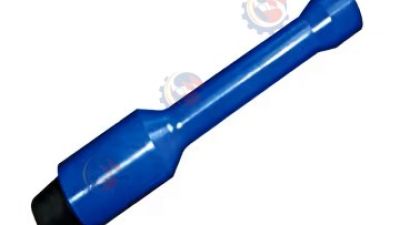
The O.D. 3-3/8" Lift Sub is an important component in perforating gun assemblies, supporting the controlled lifting, lowering, and positioning of downhole tools. Its external diameter is suited to applications where reliable handling and dimensional compatibility are essential. By providing a robust connection point, the lift sub helps crews manage perforating equipment more efficiently during deployment and retrieval in demanding well environments.

Consistent with operational priorities often highlighted in SPE and IOGP industry reporting, equipment used in well intervention should combine mechanical integrity, dependable connections, and predictable performance under pressure. This lift sub features a 2-13/16"-6 Acme-2G heavy thread designed to deliver a secure, leakage-resistant fit when properly assembled and maintained. The thread form also supports stable load transfer during tool movement and manipulation.

Built for exposure to heavy mechanical stresses, elevated pressures, and harsh downhole conditions, the resistant design promotes extended service life and dependable operation. Proper inspection of the thread, sealing surfaces, and body condition before each job remains essential for maintaining assembly integrity. When selected with compatible perforating components and handled according to approved operating procedures, the O.D. 3-3/8" Lift Sub contributes to safer, more efficient, and more controlled wellsite operations.

FAQS

What are conventional conical shaped charges used for?

They create narrow tunnels through casing, cement, and formation. The goal is controlled reservoir access. Simple, but not effortless.

Which factors affect perforation performance?

Engineers consider charge diameter, penetration, hole size, phasing, and shot density. Casing strength, cement quality, formation stress, and standoff also matter. Field conditions can change everything.

Do more perforation shots always improve inflow?

No. More shots may increase debris, weaken control, or provide little extra benefit. Placement and formation response matter more than numbers alone. That assumption deserves review.

How should perforator performance be compared?

Use standardized tests with measurable results. Compare penetration depth, entrance-hole diameter, and debris behavior. Test conditions should resemble the target well.

Why can field results differ from test results?

Laboratory conditions rarely match every downhole detail. Poor centralization, damaged casing, weak cement, or unusual stress can reduce effectiveness. Paper results are not guarantees.

What advantages can low-debris charges provide?

They may leave cleaner entry channels and reduce loose fragments. This can simplify cleanout and protect nearby completion equipment. The improvement is possible, not automatic.

What should engineers check before selecting a charge?

They should review pressure, temperature, casing, fluids, and completion hardware. Deployment limits also require confirmation. Small mismatches can matter.

Why are records and post-job reviews important?

Records capture unexpected debris, inconsistent penetration, and placement problems. Post-job analysis helps refine future designs. Some results will be disappointing. That is useful feedback.

Conclusion

Perforating Gun Shaped Charges are engineered to create controlled channels through well casing and surrounding formation, improving access between the reservoir and the wellbore. Their performance depends on the charge geometry, liner material, explosive design, penetration profile, hole diameter, debris generation, and operating conditions. Understanding these design principles helps operators match a charge to the formation, completion design, and production objectives.

In 2026, conventional conical charges remain suitable for standard perforation, while deep-penetrating charges are selected when extended formation access is required. Big-hole charges can create wider tunnels that support improved wellbore connectivity, whereas high-compaction and low-debris designs help maintain cleaner perforation intervals and reduce completion risks. The best choice should consider rock strength, pressure and temperature conditions, casing characteristics, desired penetration depth, entry-hole size, and cleanup requirements. Careful selection supports efficient, reliable, and safer well completion performance.

Isabella

Isabella

Isabella is a dedicated marketing professional at Shaanxi Brilliant Machinery Co., Ltd., where she plays a pivotal role in promoting the company’s commitment to manufacturing excellence and sustainability in the mechanical parts industry. With a deep understanding of the technical aspects of the......
Previous How to Choose Targeted Perforation Charges for Oil Wells?